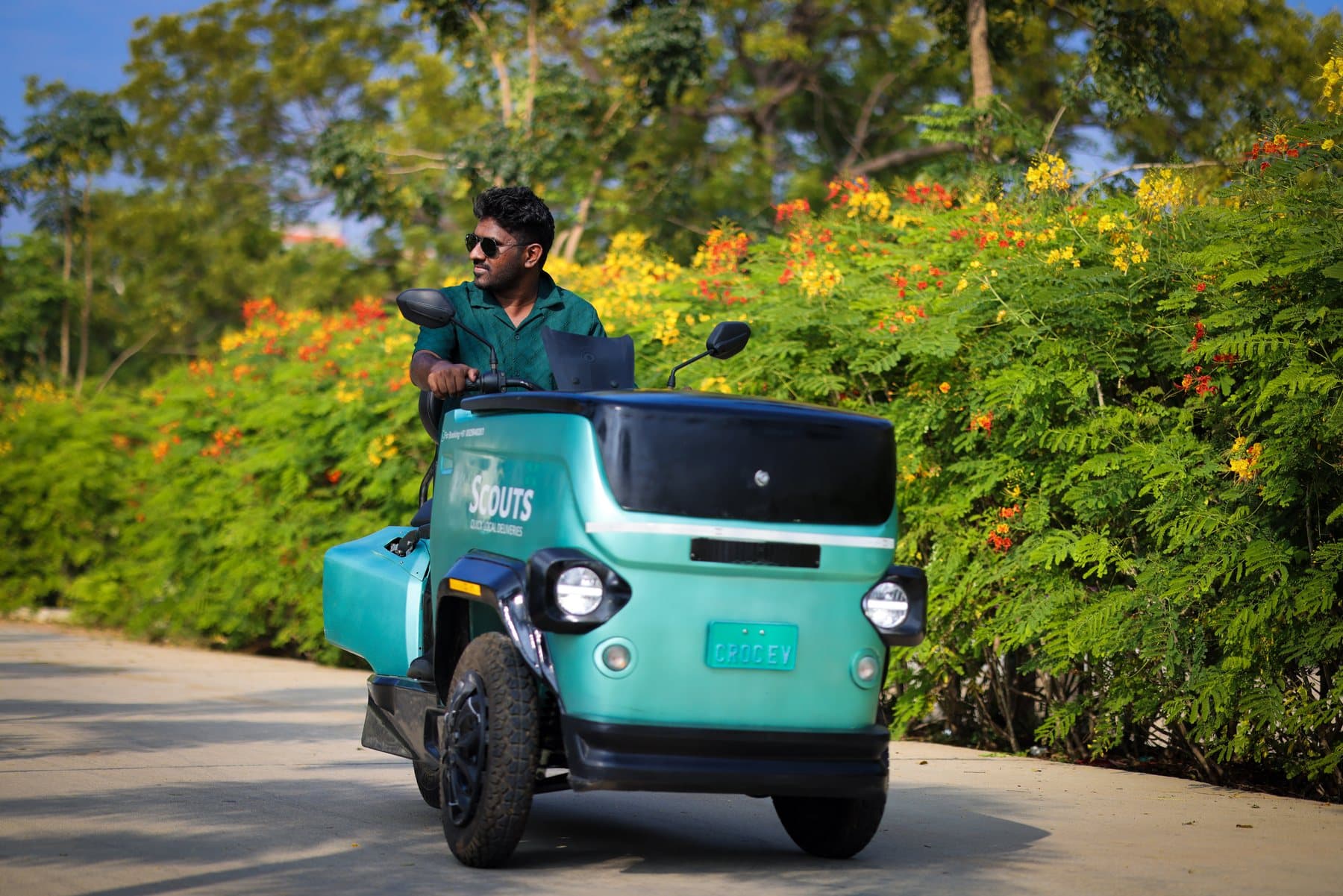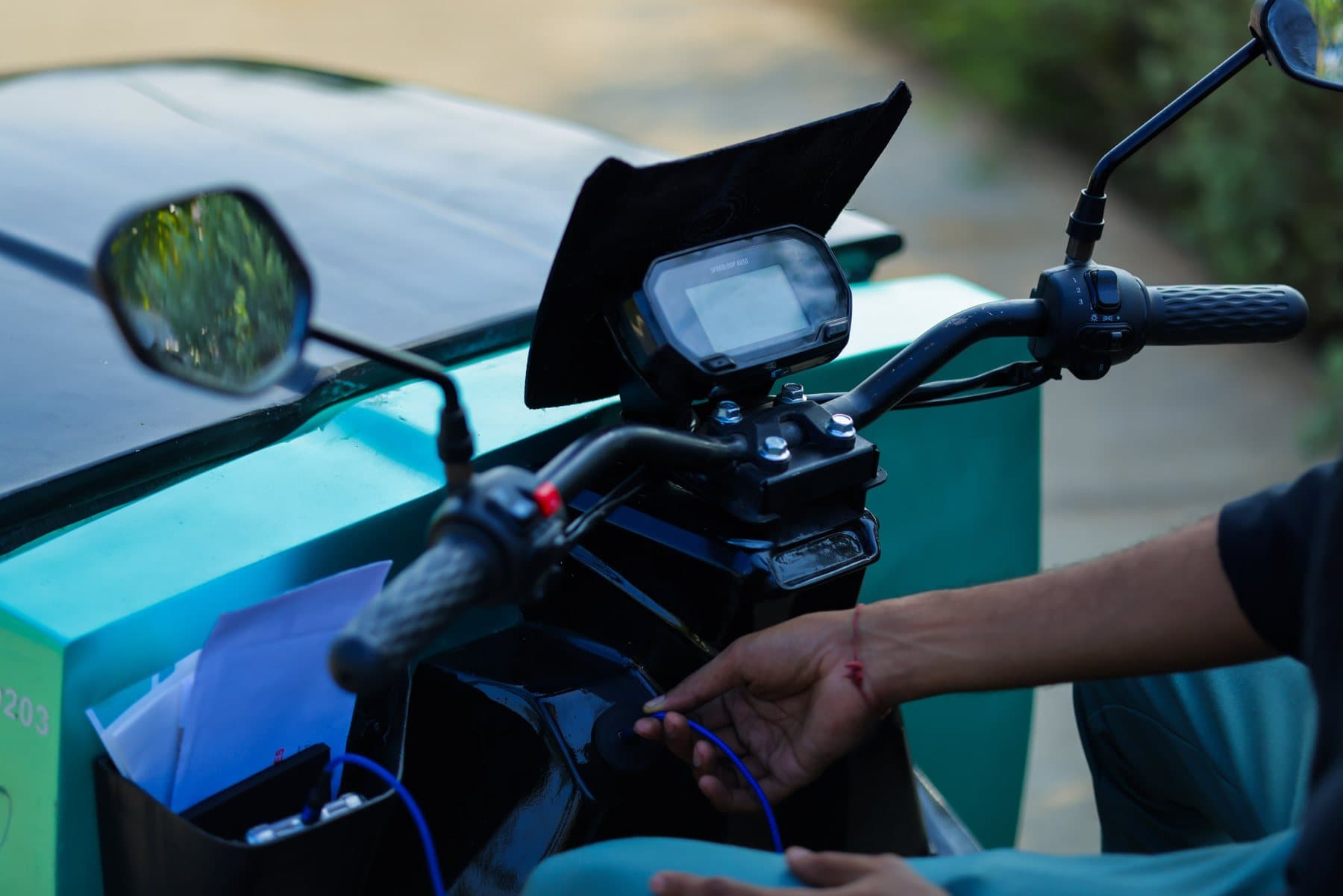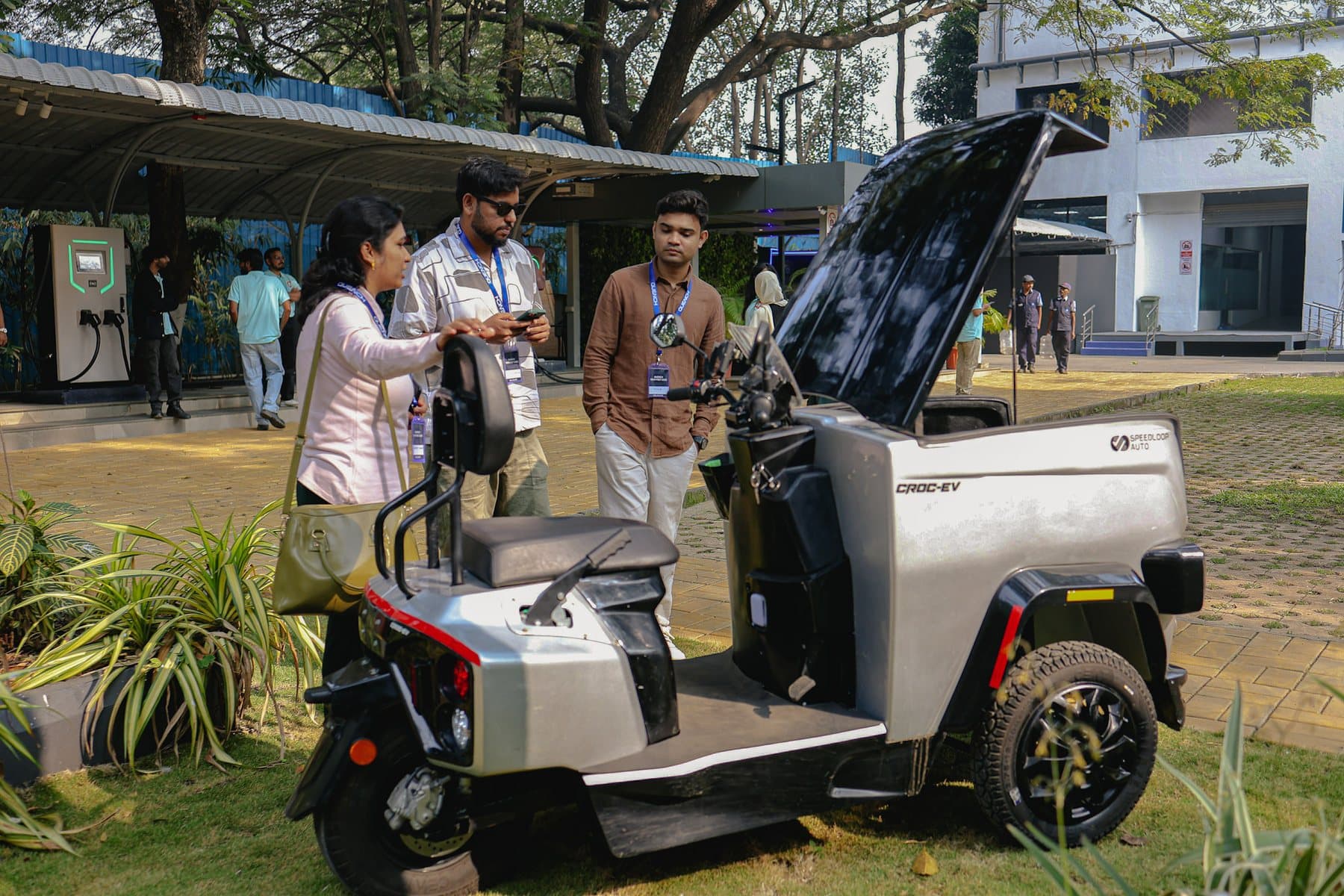
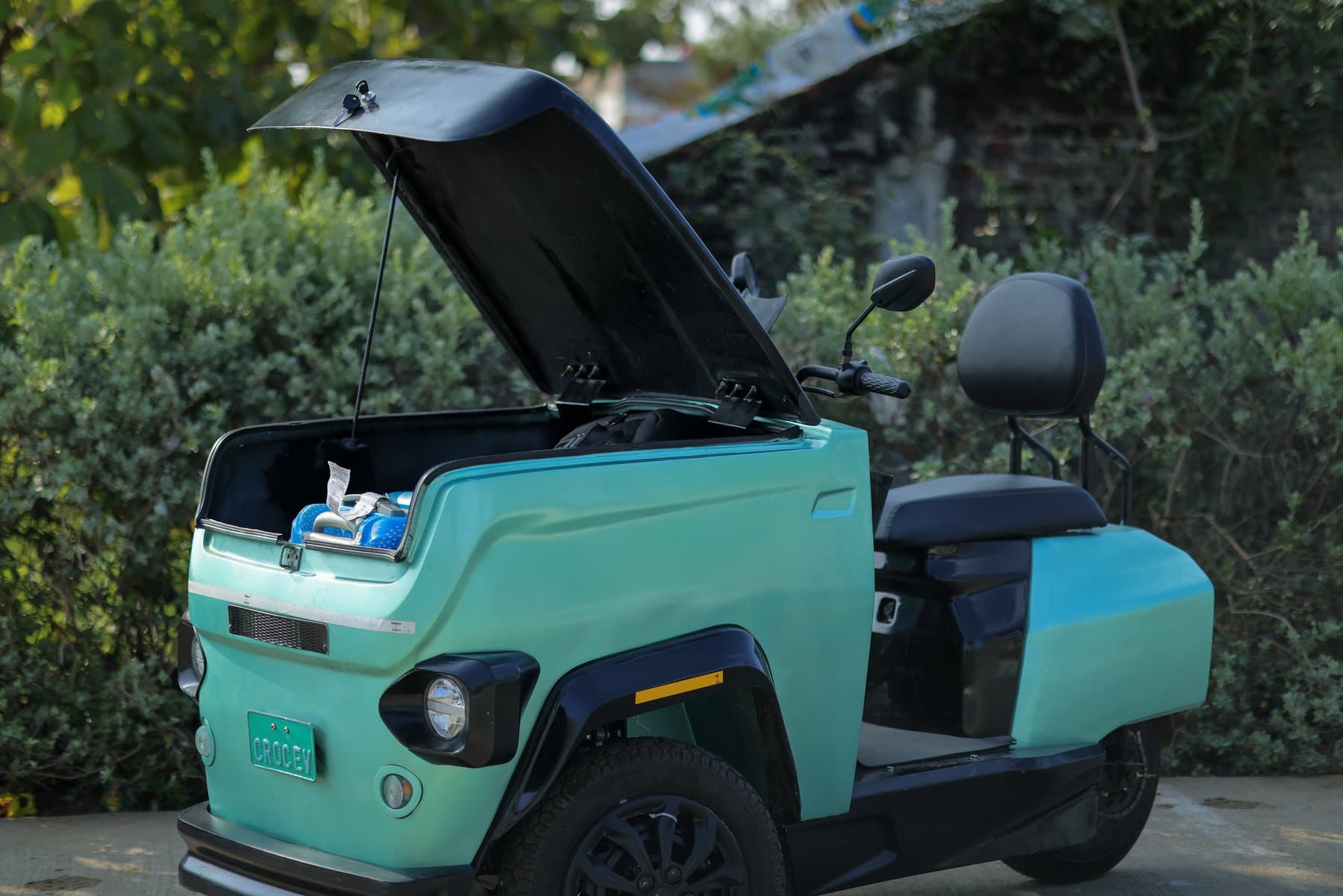
A food or vending business runs on a tight daily loop. Prepare in the kitchen or at home. Load. Reach the spot before customers do. Sell. Restock. Come back, clean up, get ready for tomorrow.
The vehicle is one part of that loop, and the wrong vehicle costs you time every single day. This checklist is for owners of chai, snack, bakery, tiffin and street-food businesses, and for anyone running a few carts at once. Work through it before you speak to any vehicle maker, including us.
1. Decide what the vehicle actually does
There are two quite different jobs here, and they lead to different vehicles.
- The vehicle carries goods to a stall, outlet or customer. Bakery trays, tiffin runs, kitchen-to-outlet supplies and packaged snacks all fit this job. A closed, lockable box is what you need.
- The vehicle is the stall. You sell from it at a fixed spot or along a route. That needs a vending body, which we build to order on the same CROC EV chassis.
If you need a vending body, describe the counter, storage and equipment you want when you enquire. Remember that the body and everything mounted on it count towards the payload, so decide with us what travels on the vehicle and what stays in the kitchen.
2. Weigh your real load
CROC EV is rated for 80 kg of payload, with a 25% overload allowance that takes it to 100 kg. That sounds simple, but food loads are deceptive. Liquids, steel vessels, ice and stacked trays add up quickly.
- List everything that goes on the vehicle on a normal day: stock, containers, utensils, packaging and any equipment.
- Weigh each item on a shop scale, with containers full, not empty.
- Add the items you only carry on heavy days, such as weekends or festivals.
- Compare the normal-day total with 80 kg.
- Keep the overload allowance for the occasional heavy day, not for every day.
If your business uses an LPG cylinder, count its filled weight in the total, and check with your gas supplier and the local rules on how a cylinder may be carried on a vehicle.
3. Map the daily route
CROC EV goes 40 km on one battery and 80 km with a second battery. Measure your real loop rather than guessing: kitchen to selling spot, the restock trip in the middle of the day, any detour to the market for supplies, and the trip home.
The top speed is 25 km/h. Plan your departure around it, so you are at your spot before the first customers arrive. The vehicle is built for short, dense city runs, which is what most vending routes are.
Then check the hard part of the route. Measure the narrowest gate or lane against the overall width of 930 mm, and look at speed breakers, ramps and broken stretches against the ground clearance of 170 mm.
The numbers a vendor needs
- Payload
- 80 kg, plus 25% overload allowance
- Cargo box
- 380 litres, lockable, in front of the driver
- Range
- 40 km, 80 km with a second battery
- Charging
- About 2 h 30 min from a 5 A socket
- Top speed
- 25 km/h
4. Plan charging around your kitchen hours
CROC EV charges in about 2 h 30 min from an ordinary 5 A socket, using the 750 W charger that comes with the vehicle. No charging station is needed. Most vendors can charge at the kitchen while they prepare, or overnight at home or at the shop.
For running costs, a full charge is about 2 kWh, so multiply your tariff per unit by two. The battery is a 2 kWh removable lithium-ion pack, and a second battery means one can be charging while the other is on the road, which helps on long selling days.
Pick the charging point before the vehicle arrives: an earthed socket in a dry, ventilated spot, close enough to reach without an extension board.
5. Hygiene, security and the rules where you sell
- Hygiene: the box is FRP with steel reinforcement, which can be wiped down. Line it with food-grade crates or trays that come out for washing at the end of the day.
- Security: the box locks, and a smart e-lock is available as an option. Stock stays locked when you step away to serve.
- Tracking: GPS tracking, geo-fencing and remote lock let an owner with more than one cart see where each vehicle is and lock it from a phone.
- Safe starts: brake-to-start, sit-to-start and auto-off mean the vehicle does not move off by accident at a crowded spot.
- Local rules: in general, vending needs permission from the local body and a food safety registration or licence. Check what applies where you sell before you choose a spot.
Your next step
Bring your checklist answers to the conversation: what you sell, what the load weighs, the route, where you will charge, and whether you need a closed box or a vending body. That is enough for a useful first discussion.
Send your route on WhatsApp to UrbanCarriers by Speedloop Auto at +91 86250 40203, or tell us what you carry and where at speedloopauto.com/contact. Most vendors finance their first vehicle, and we can talk through financing support with you. If you are new to the vehicle's layout, start with what a reverse trike is.