
Most vehicle mistakes in small-goods work are sizing mistakes. A rider balances crates on a scooter because nothing in between was considered. Or a loader goes out half-empty on short runs because it was the only vehicle in the yard.
Both cost you every day, in time, in wear and in risk to the goods. This post gives a simple way to right-size the vehicle, starting from the job rather than the brochure.
Start from the job, not the vehicle
A vehicle is the answer to a question about your work. If you start with the vehicle, you end up fitting the work around it. If you start with the job, the right size usually becomes obvious.
The job has four parts: what you carry, how much it weighs, where it goes, and how often. Everything else follows from those.
Gather the answers from a real week, not from memory. Weigh the load on your busiest day and your quietest day, note the stops and the distance on each, and write down the one stretch of road every driver complains about. A week of notes is worth more than any brochure, ours included.
Three bands of city cargo
Small city goods tend to fall into three bands. Knowing which one you are in narrows the choice quickly.
- Light and compact: documents, a few parcels, a small kit. A two-wheeler handles this well, as long as the load does not affect the rider's balance.
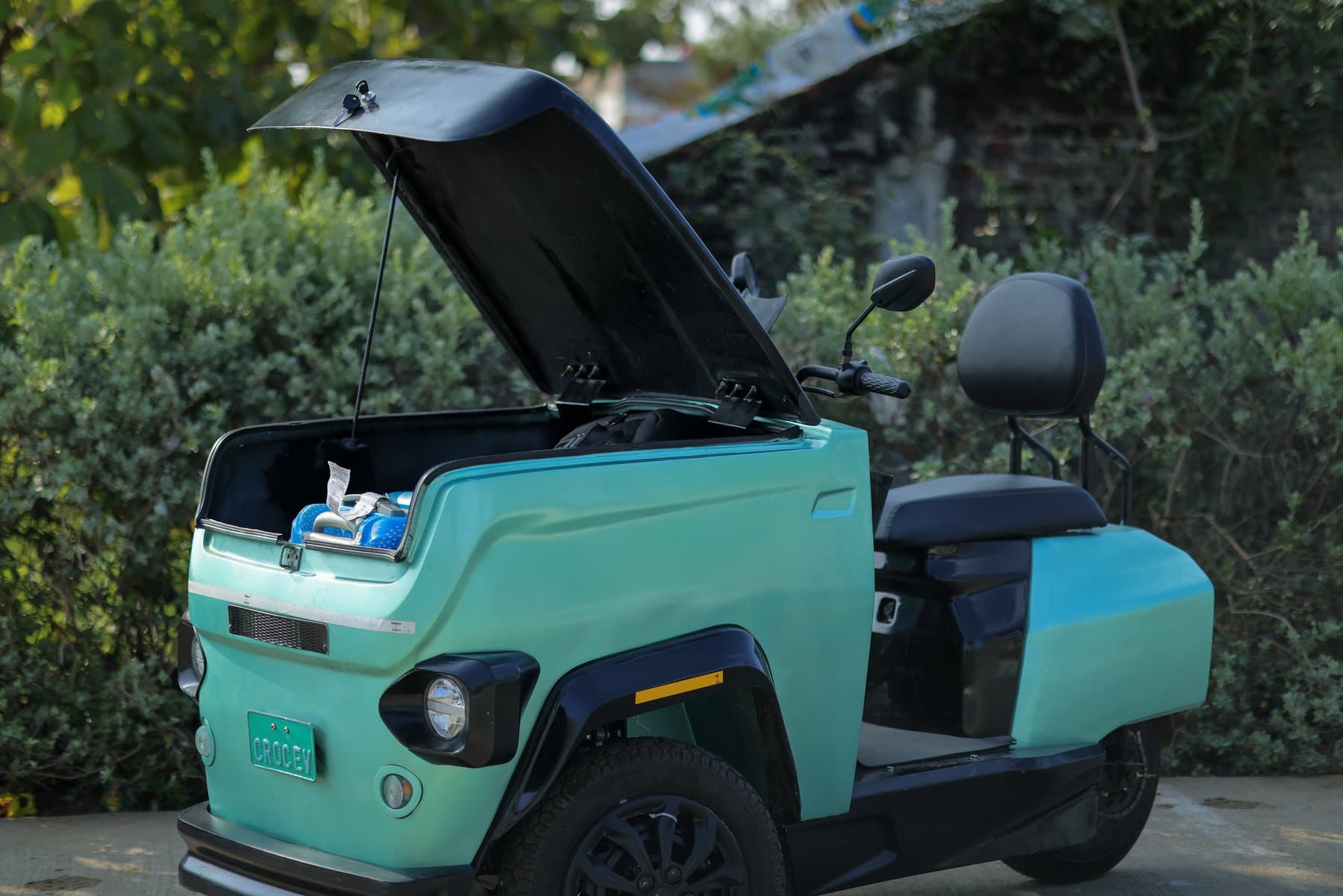
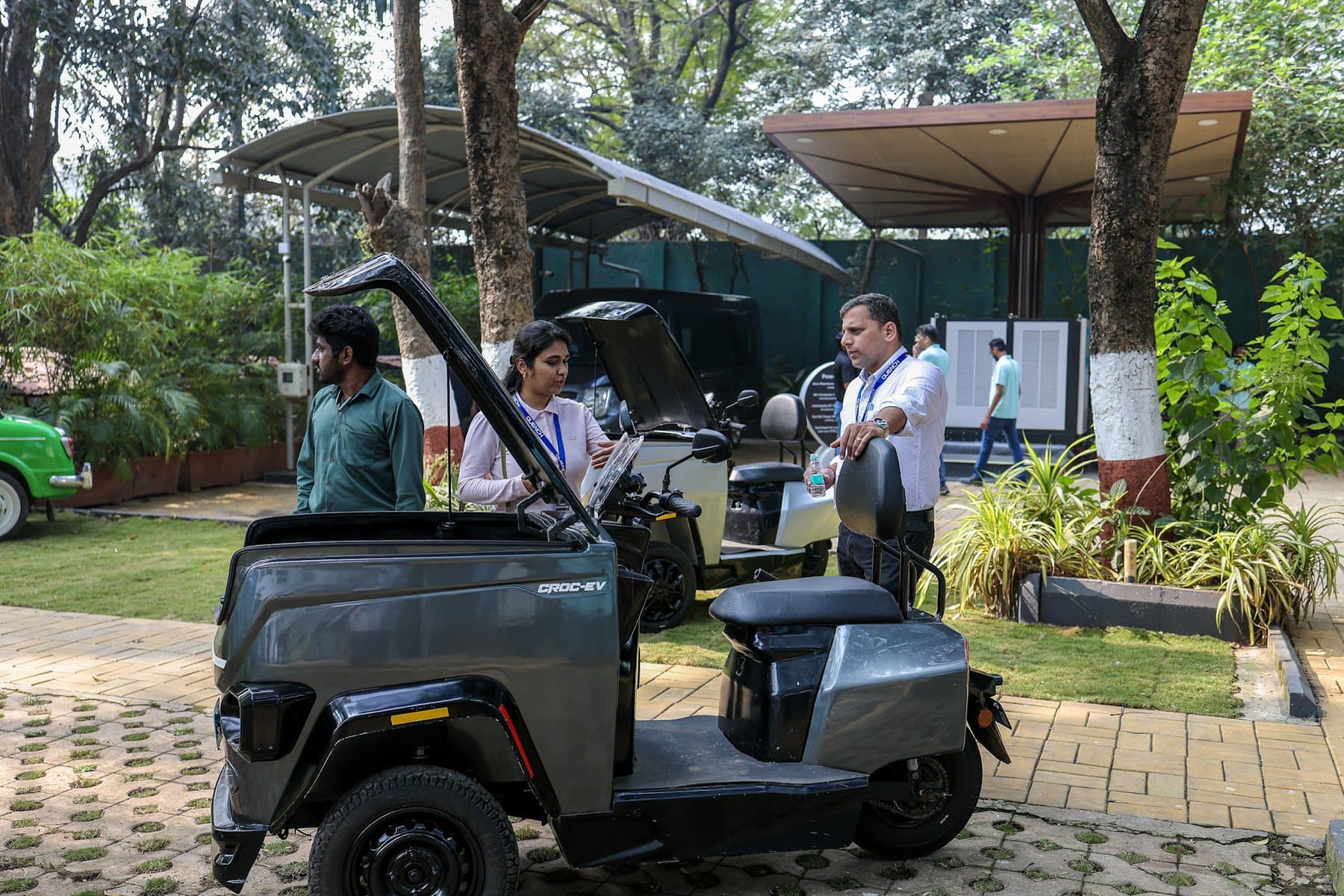
- The missing middle, 0 to 100 kg: crates, trays, cartons, cans and service kits that are too bulky or awkward for two wheels but nowhere near a loader's load. Our RT100 platform is built for this band, and CROC EV is the first vehicle on it.
- Heavy: regular loads well above 100 kg. This is e-loader territory, and inside factories and campuses, Titan EV is configured per site for moves up to one tonne.
Between the middle and the heavy band, STIGER, a two-seat reverse trike for the 100 to 250 kg band, is in development.
Five questions that settle the size
Answer these with numbers from a normal working week, not a guess.
- What is the heaviest load on a normal day, in kilograms? Weigh it. If it is within 80 kg, with the occasional day up to 100 kg, you are in the missing middle.
- Does it fit? Check your crates, trays or cartons fit a 380-litre box. Measure your largest item and ask us to check it against the box.
- How far is the whole day's route? Add every leg, including the return. CROC EV goes 40 km on one battery and 80 km with a second.
- What is the hardest part of the route? Measure the narrowest gate or lane against an overall width of 930 mm, and look at ramps and speed breakers against a ground clearance of 170 mm.
- Who rides? CROC EV seats the driver only. If a helper must travel with every load, you need a different vehicle.
Also note the speed. CROC EV's top speed is 25 km/h, which suits short, dense routes with many stops.
Signs you are in the missing middle
- Riders carry crates or cartons on two-wheelers, and you worry about balance, damage or the rider.
- A bigger vehicle goes out on short runs carrying a fraction of what it was built for.
- Loads are frequent, bulky and fairly light: many small trips rather than a few big ones.
- Routes have many stops, narrow access and short distances between drops.
- Goods need to be closed in and locked between stops.
If several of these sound familiar, a cargo EV in the 0 to 100 kg band is worth a closer look. If none do, you are probably sized correctly already, and we would rather tell you so.
Right-sizing a fleet
For a fleet or facilities manager, the answer is rarely one vehicle for everything. Sort your routes by load and distance, and size each group on its own. Light, frequent routes in the missing middle suit CROC EV. Heavy line-side and campus moves suit Titan EV. Long or heavy runs stay with larger vehicles.
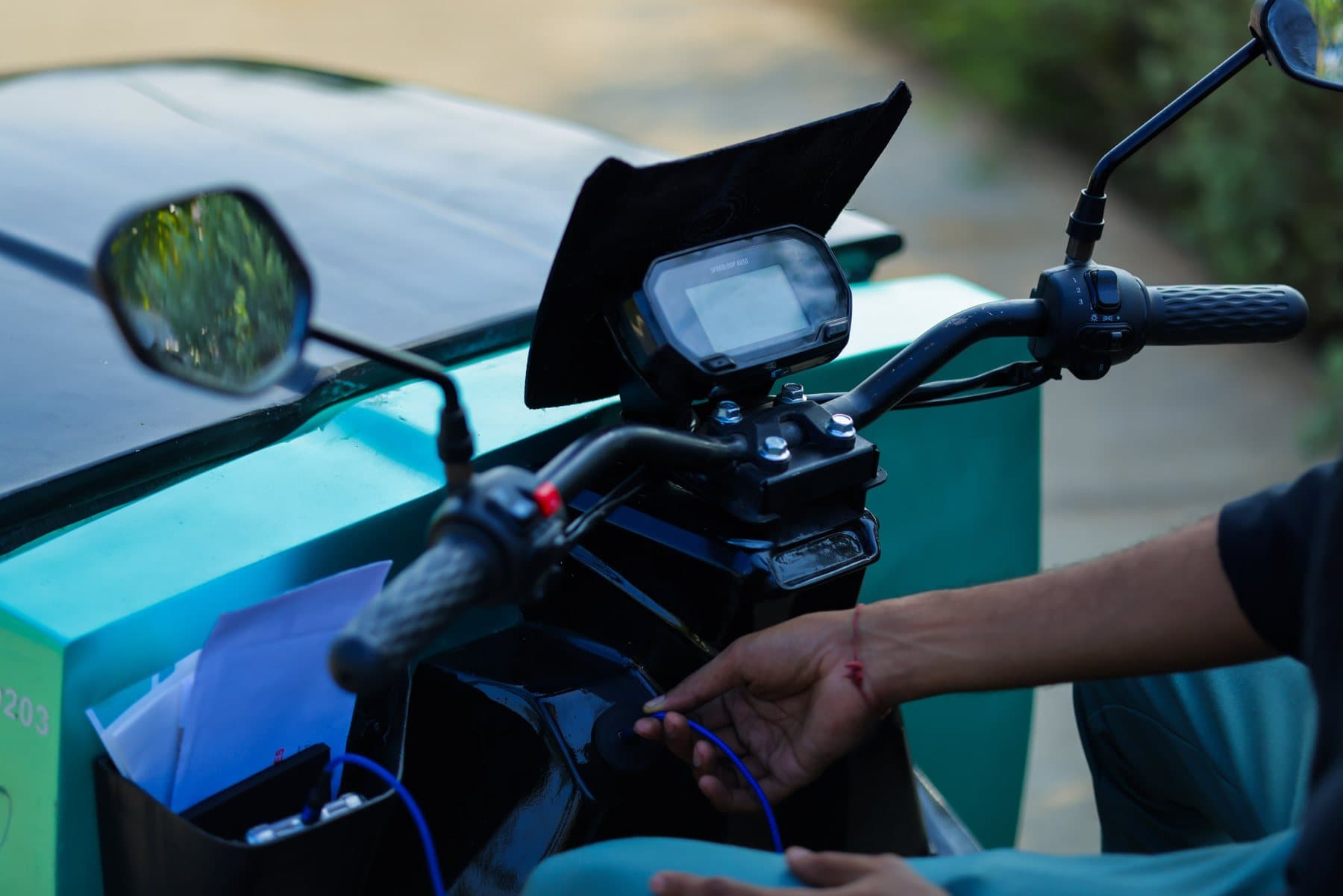
GPS tracking, geo-fencing and remote lock on CROC EV help a manager see where each vehicle is and keep it within its area. Special bodies for vending, sweeping and civic work, and campus use are built to order on the same chassis, so one vehicle family can cover several jobs.
Get a second opinion on your route
Send your route on WhatsApp to UrbanCarriers by Speedloop Auto at +91 86250 40203, or tell us what you carry and where at speedloopauto.com/contact. We will tell you honestly which band your work sits in, even when the answer is not CROC EV. We can also talk through financing support.
New to the layout? Read what a reverse trike is, and why a cargo EV needs one, or compare the numbers on the CROC EV spec sheet.