A service call goes well when the technician arrives on time with the right tool and the right part. It goes badly when the part is still at the office, the drill is with another technician, or the tool bag slipped off the back of a scooter on the way.
Electricians, plumbers, HVAC technicians and facility-maintenance teams carry the same kind of load: a set of tools, a stock of common spares, and sometimes one bulky item for the day's job. This post is for owners and service managers who want to plan that load, and the day around it, properly.
What a service load really is
Before you look at any vehicle, lay out a normal day's kit on the floor and sort it into three groups:
- The core kit, which goes on every job: tool cases, a meter, a drill, safety gear.
- The consumables your team uses every day: switches, fittings, joints, cable, tape and filters.
- The day's special item: a fan, a geyser, a pump, a coil of cable or a unit to be fitted.
Weigh each group. The core kit and consumables rarely change, so together they set your base load. The special item is what decides whether a given day's work fits.
Fitting the kit to the vehicle
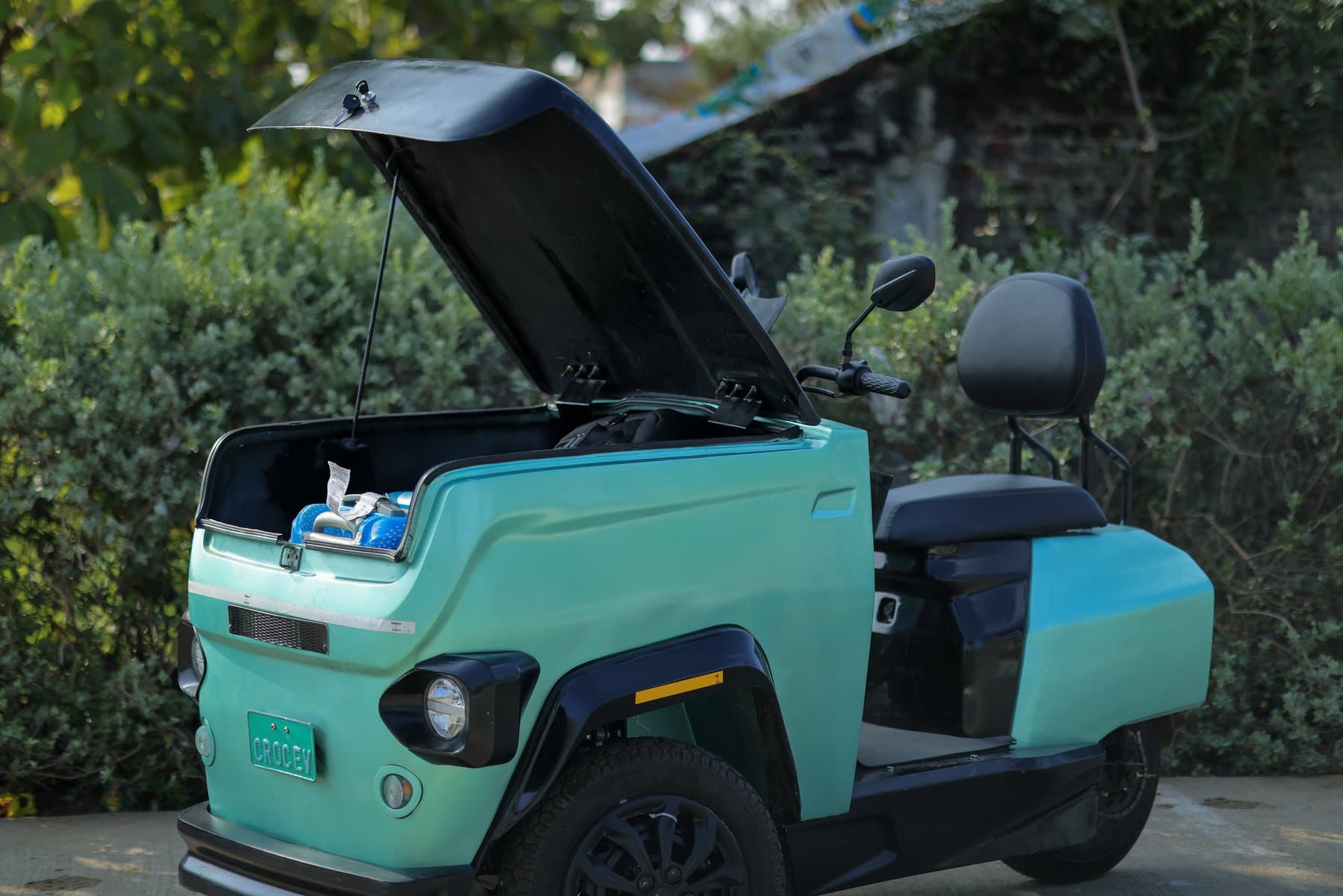
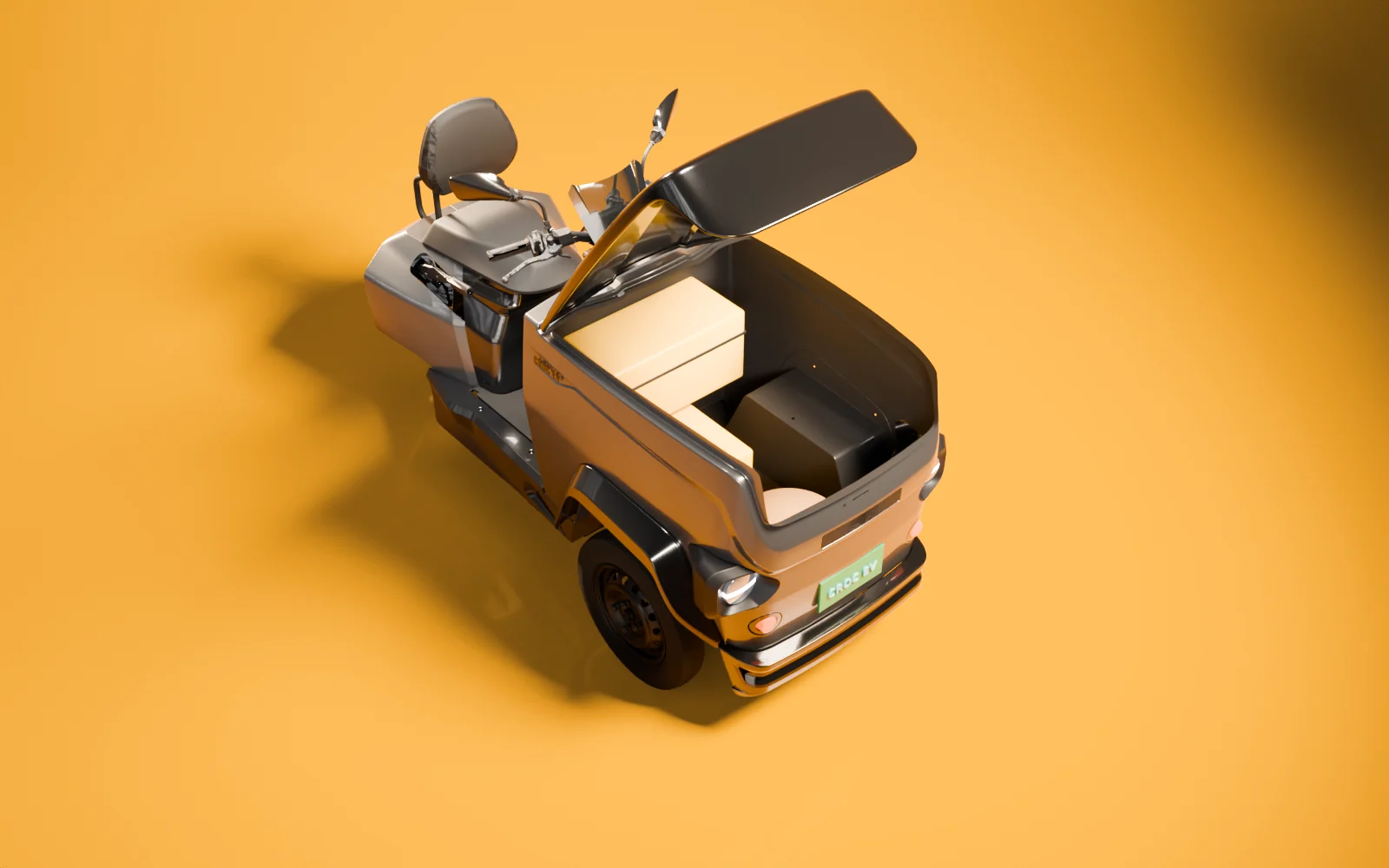
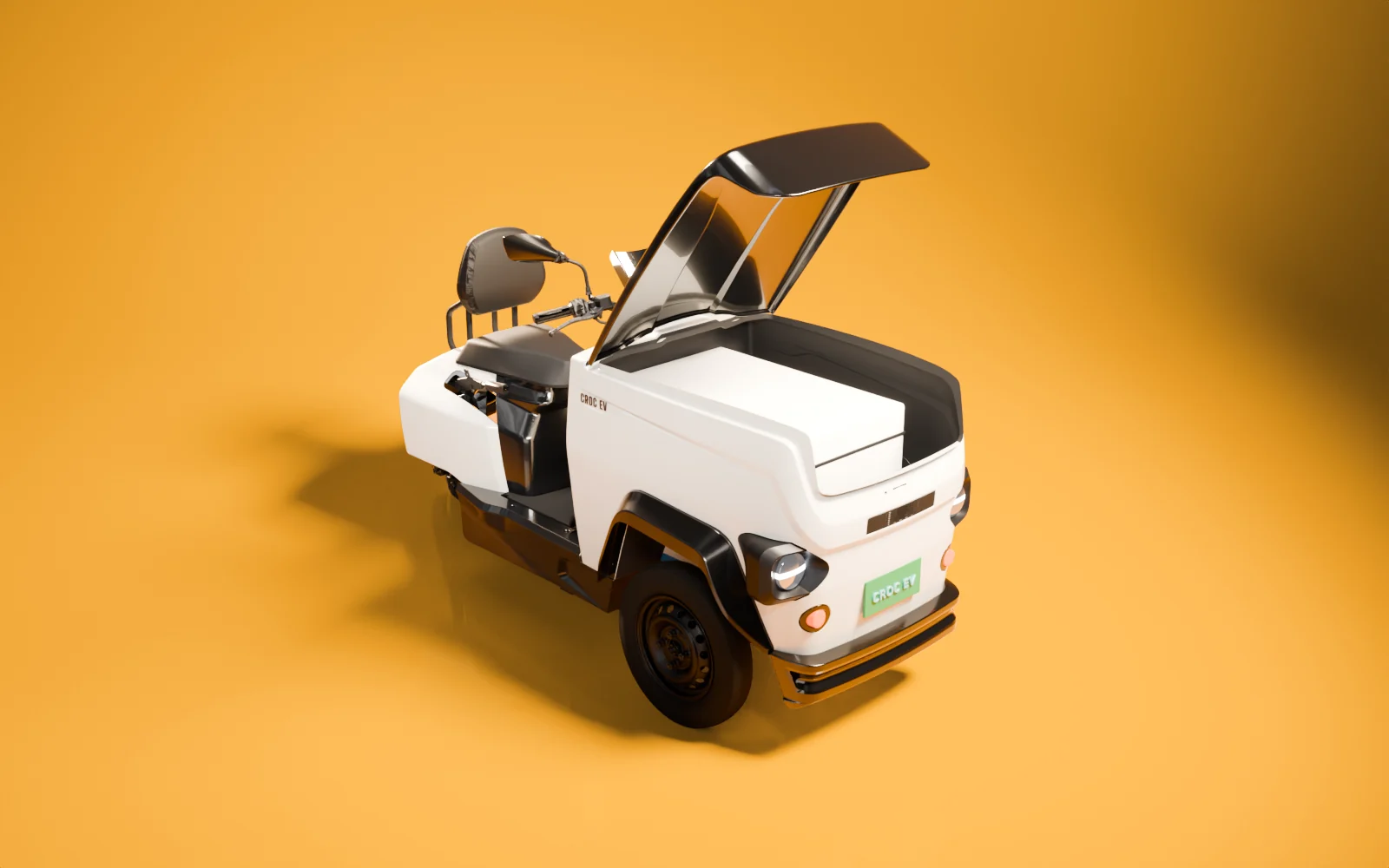
CROC EV is rated for 80 kg of payload, with a 25% overload allowance that takes it to 100 kg. The 380-litre box locks and sits in front of the driver, inside the frame, so the kit rides between the two front wheels instead of hanging off the back.
- Keep the core kit in fixed cases that stay in the box, so the technician sees at a glance that nothing is missing.
- Keep consumables in small labelled bins, and restock them from a list at the end of each day.
- Put the heaviest items at the bottom, and keep anything that can roll or leak in a closed container.
- Leave room for old parts coming back from a job: a removed switchboard, a faulty pump, a used filter.
Planning a day of calls
Service work is usually organised by zone: a technician covers a set of areas and moves between calls through the day. CROC EV goes 40 km on one battery and 80 km with a second battery, and its top speed is 25 km/h. That suits a technician working one part of the city, with short hops between calls.
- Group the day's calls by area, not by the order in which they came in.
- Add the distance from the office to the first call, between calls, and back.
- If the day runs past 40 km, plan a second battery, or a top-up at the office over lunch: a full charge takes about 2 h 30 min from an ordinary 5 A socket.
- Note any site with a narrow entry or a steep ramp, and check it against the overall width of 930 mm and the ground clearance of 170 mm.
The numbers for a service kit
- Payload
- 80 kg, plus 25% overload allowance
- Cargo box
- 380 litres, lockable, in front of the driver
- Range
- 40 km, 80 km with a second battery
- Charging
- About 2 h 30 min from a 5 A socket
- Top speed
- 25 km/h
- Telematics
- GPS tracking, geo-fencing, remote lock
Parked outside a customer's building
A technician can spend an hour or more inside a building while the vehicle waits outside, and that is when tools go missing. The box locks, and a smart e-lock is available as an option. GPS tracking shows a service manager where each vehicle is, geo-fencing flags a vehicle that leaves its zone, and remote lock secures it from a distance.
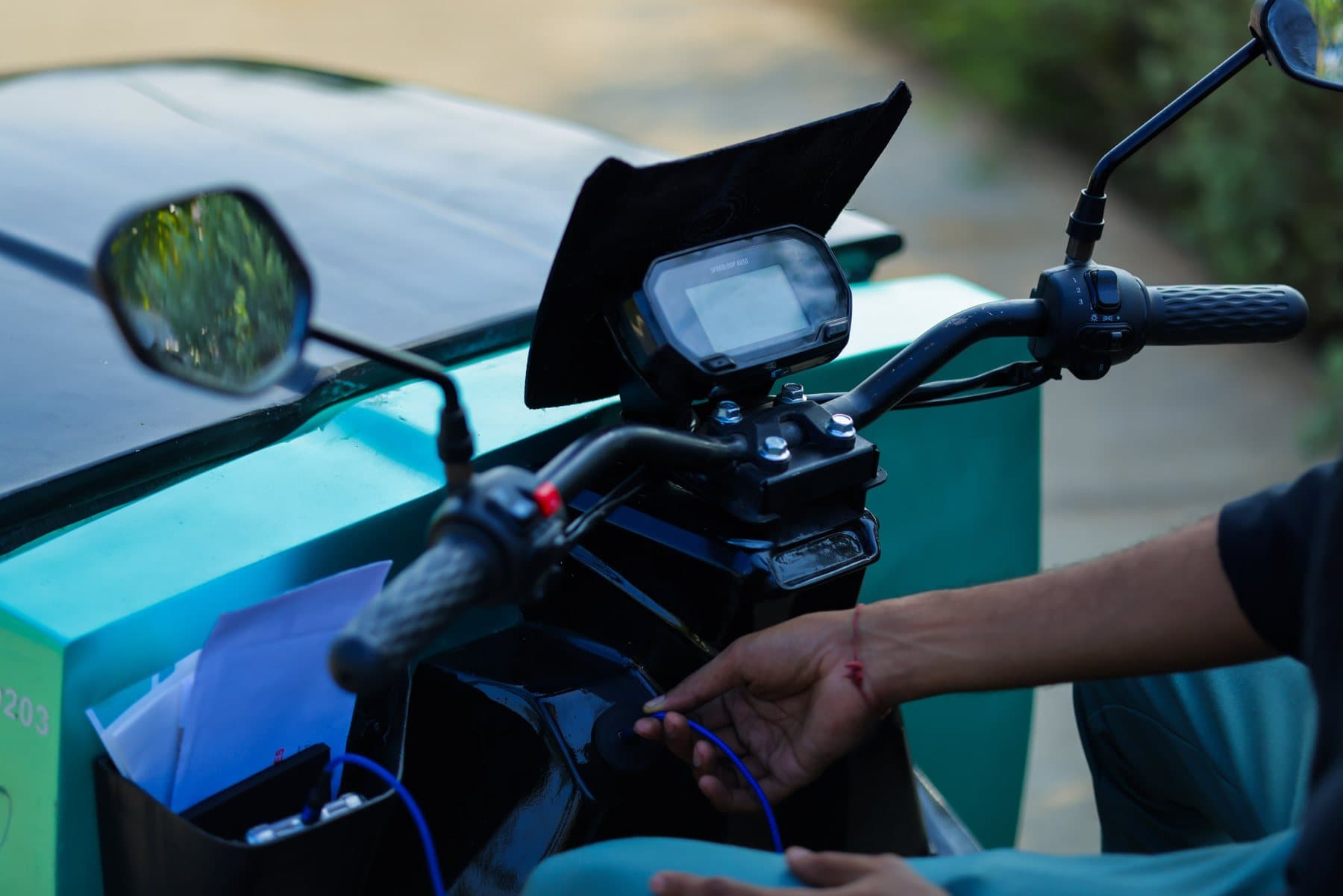
For a firm with several technicians, tracking also helps with dispatch: you can see which vehicle is nearest before you assign the next call. Brake-to-start, sit-to-start and auto-off add a layer of safety in busy compounds and parking areas.
Tell us your kit
Send a photo of your laid-out kit, with its weight and your longest item, on WhatsApp to UrbanCarriers by Speedloop Auto at +91 86250 40203. Or tell us what you carry and where at speedloopauto.com/contact. We will tell you whether it fits, and we can also talk through financing support.
To plan batteries for a full day of calls, read one battery or two. For charging at the office, read charging from an ordinary 5 A socket.