Most enquiries we receive start with one question: will it work for me? We can only answer that honestly with numbers from your own work. A brochure cannot tell you whether a vehicle fits your load, your lanes and your day, and neither can we without the facts.
This post lists the five numbers we ask for, how to gather them in a normal week, and how to try a vehicle on one route before you move a whole fleet to it.
1. The heaviest normal load, in kilograms
Weigh the load on your busiest normal day, including crates, containers and packaging, not only the goods. CROC EV is rated for 80 kg, with a 25% overload allowance to 100 kg. If your normal load is within 80 kg, we are in the right range. If it regularly passes 100 kg, we will tell you so, and point you to Titan EV for site moves up to one tonne, or to a bigger vehicle.
2. The size of the load
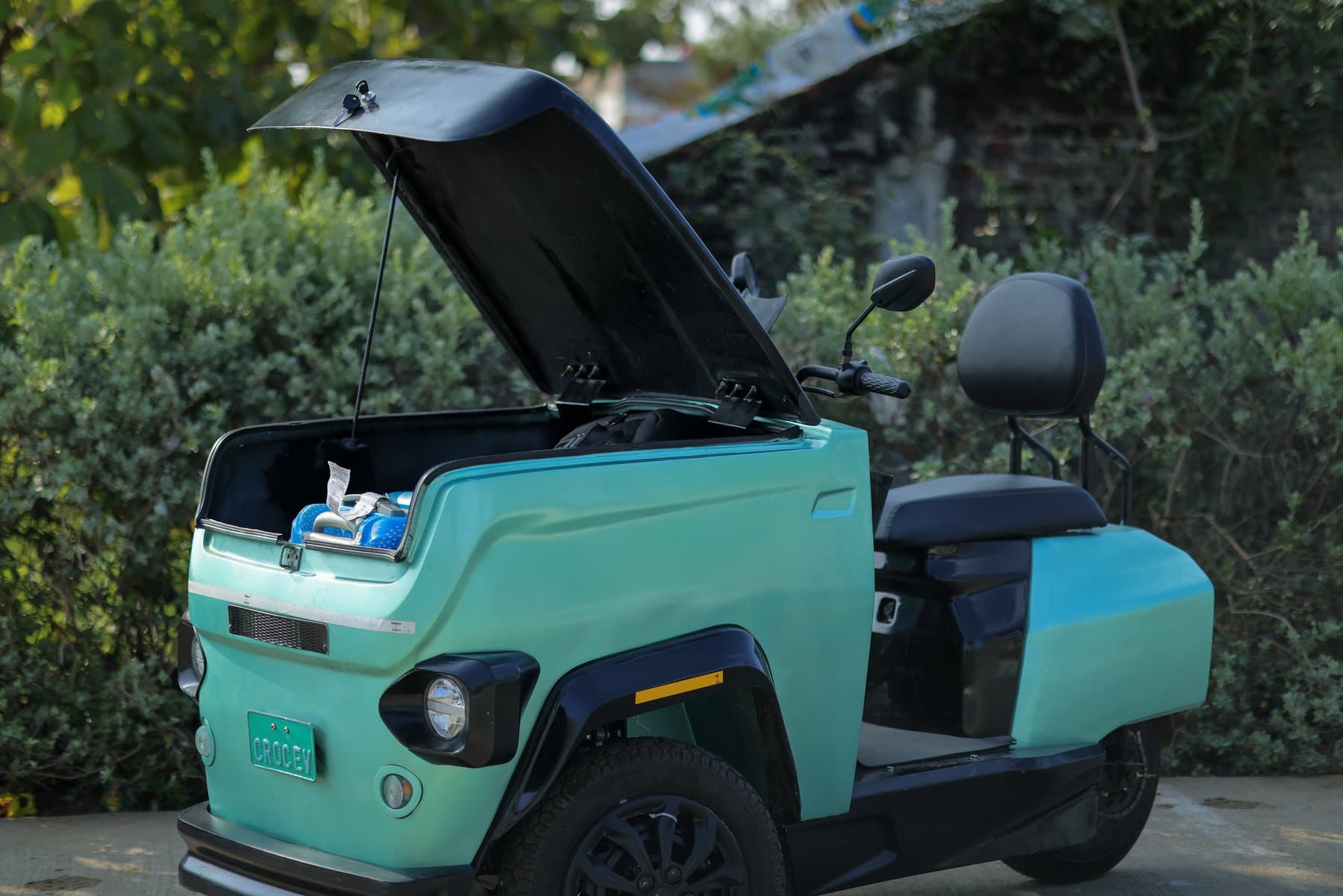
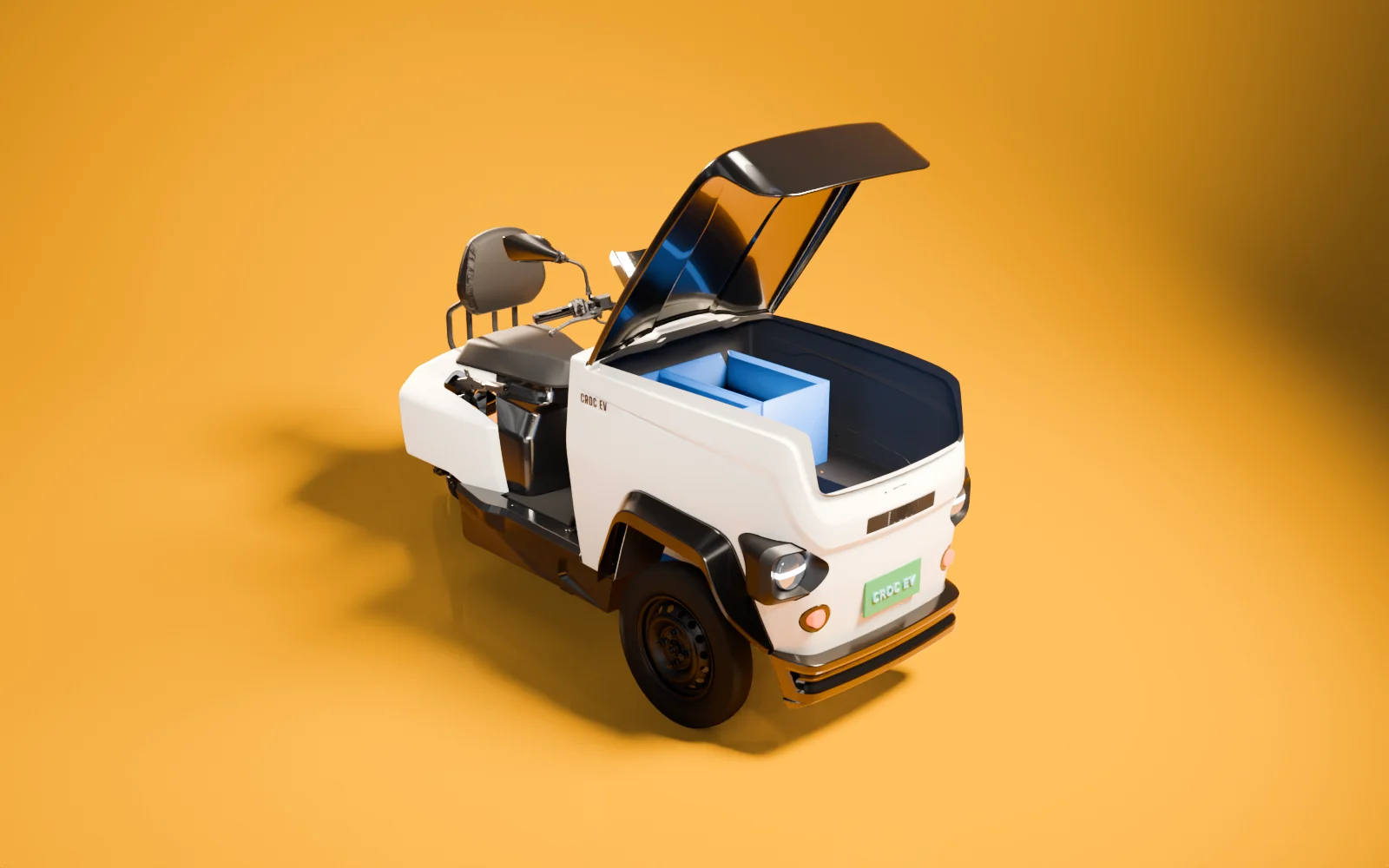
Tell us what the load is made of: crates, trays, cartons, cans, bags or a kit. The box holds 380 litres. Light, bulky goods fill the box before they reach the weight limit, so for parcels, linen and packaged goods this number matters as much as the first. Send the size of your largest item, and we will check it against the box.
3. The day's distance, in kilometres
Measure the whole day, including the return to base and any second round. CROC EV goes 40 km on one battery and 80 km with a second battery. A week of odometer readings is worth more than an estimate from a map.
4. The number of stops, and the time at each
A route of thirty short stops and a route of three long ones are different jobs. Tell us how many stops a normal day has, roughly how long each one takes, and when the first and last customers expect you. The top speed is 25 km/h, and on dense routes the time at each stop usually decides the day.
5. The hardest point on the route
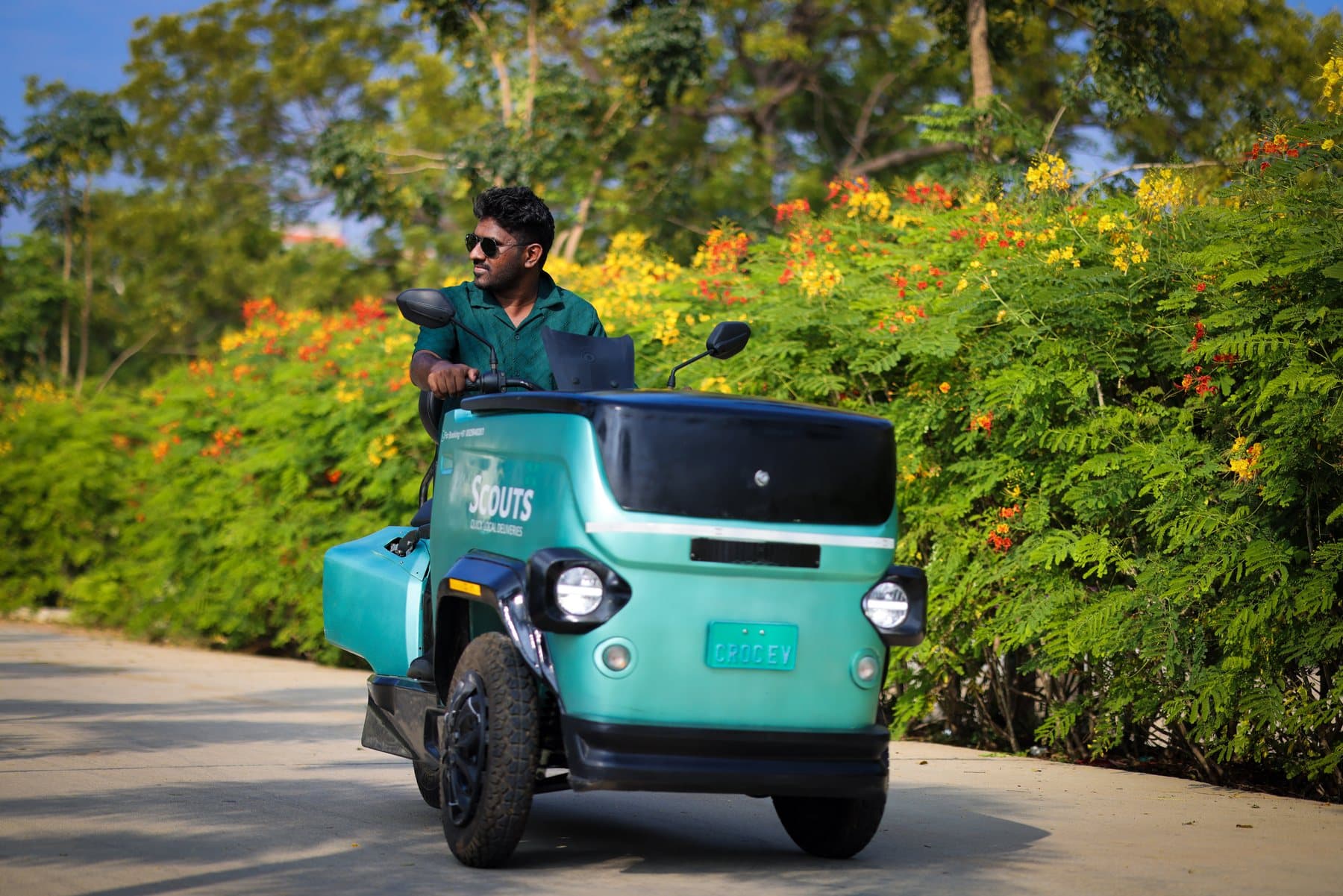
Every route has one: a narrow gate, a steep ramp, a broken stretch, a lane where nothing can stop. Measure it. The overall width is 930 mm and the ground clearance is 170 mm. If you can, send a photo of the spot.
What we check your numbers against
- Payload
- 80 kg, plus 25% overload allowance
- Cargo box
- 380 litres, lockable, in front of the driver
- Range
- 40 km, 80 km with a second battery
- Top speed
- 25 km/h
- Overall width
- 930 mm
- Ground clearance
- 170 mm
Try one route before a fleet
If you run several vehicles, do not change every route at once. Pick one route that is typical of your work, ideally the one with the hardest point you named, and run one vehicle on it first. Keep simple notes for a few weeks:
- Kilometres run each day, and the battery level at the end of the day.
- Loads that did not fit, by weight or by size.
- Stops where access was a problem.
- What the driver says after the first week, and again after the last.
Those notes will tell you more than any brochure about which of your other routes suit the vehicle and which do not. If you are in Pune, you can also book a demo ride before you decide.
Send us your five numbers
Send your five numbers on WhatsApp to UrbanCarriers by Speedloop Auto at +91 86250 40203, or tell us what you carry and where at speedloopauto.com/contact. We reply within one working day, and we will tell you honestly whether the work suits CROC EV, Titan EV, a body built to order, or a different vehicle. We can also talk through financing support.
To see how these numbers decide the size of vehicle, read how to right-size the vehicle for the job.