A last-mile day runs in waves. Parcels arrive at the hub, get sorted by area and go out. Failed deliveries and pickups come back, and the next wave goes out. The vehicle on that route spends most of its day stopping, not driving.
That shapes what you need from it: a box that closes and locks, room for bulky but light cartons, a narrow body for lanes and society gates, and enough range for several short waves. This post walks through planning parcel waves around CROC EV, with the arithmetic written down.
Parcels are a space problem first
For milk and water, the weight limit arrives before the box is full. Parcels are usually the opposite. Most courier and online-order parcels are light for their size: clothing, small electronics, documents and home goods. So with parcels, plan by litres first and kilograms second.
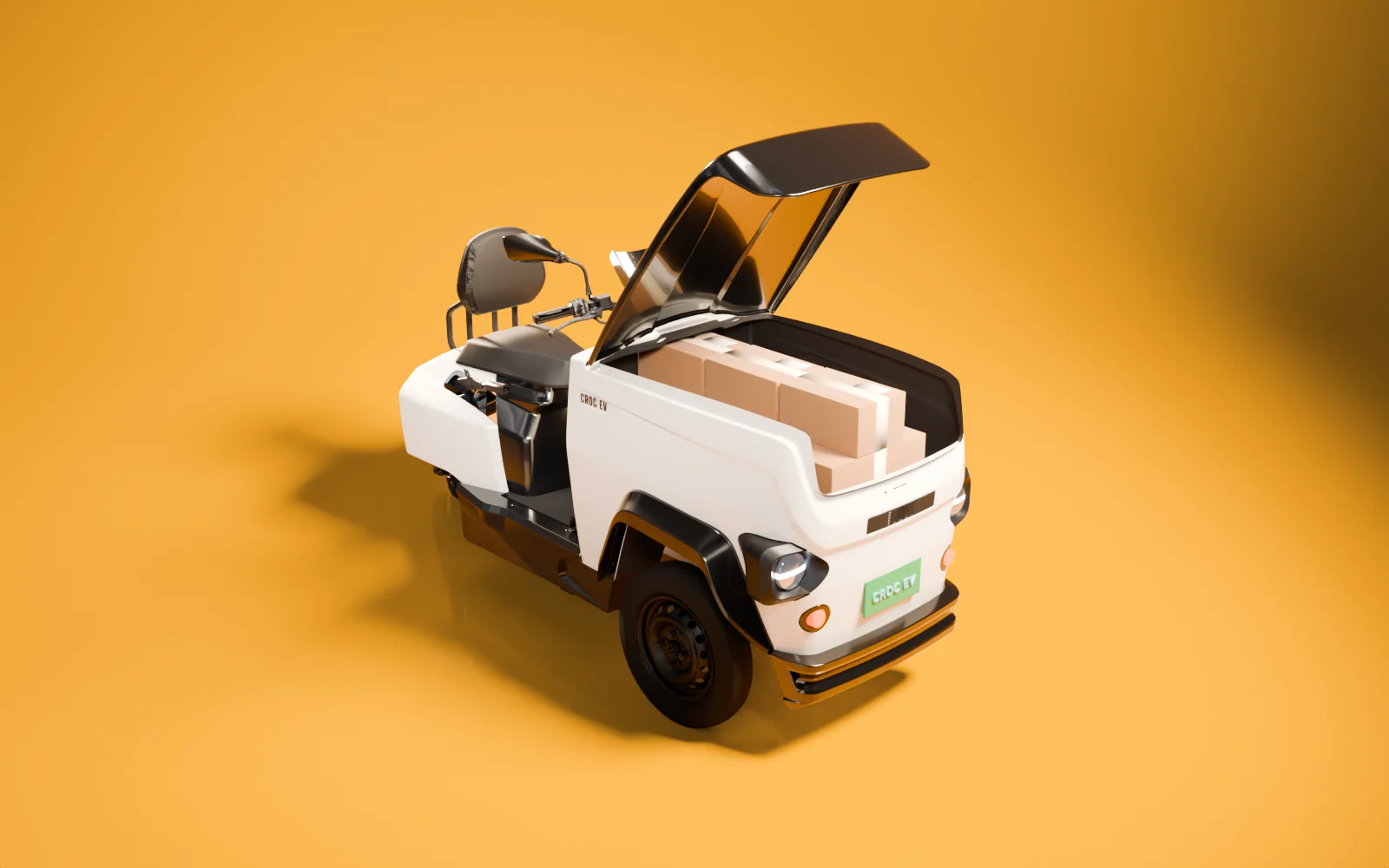
CROC EV's box holds 380 litres and the vehicle is rated for 80 kg of payload, with a 25% overload allowance to 100 kg. A heavy parcel mix, such as books, tiles or bottled goods, can still reach the weight limit first, so weigh one full wave at least once.
Sort the wave by stop, load it in reverse
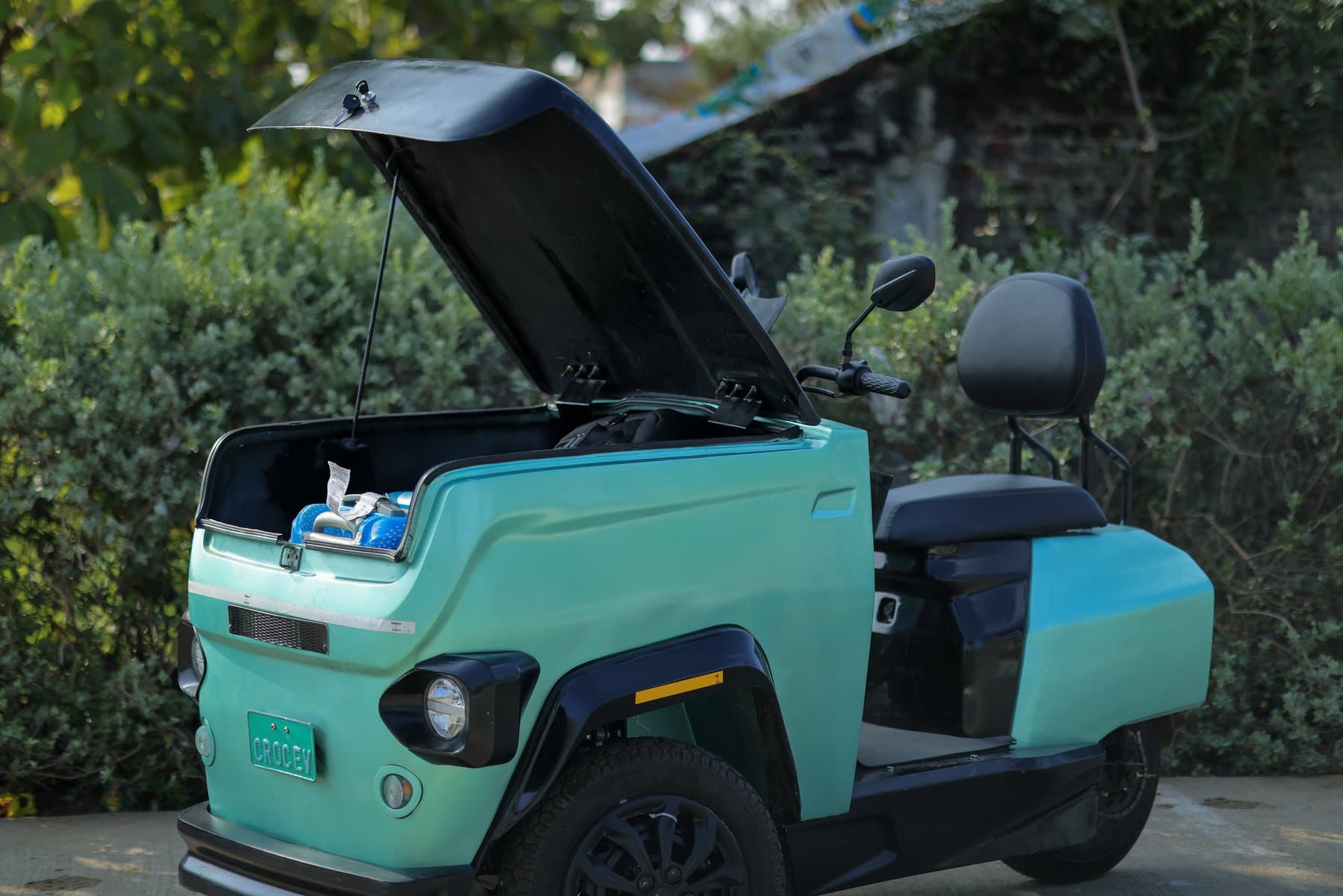
The box sits in front of the driver, in view from the seat. That helps only if the load is in order. A simple routine saves a minute or two at every stop, which adds up over a day:
- Sort the wave by area at the hub, then by stop order within each area.
- Load the last stop first, at the bottom or back of the box, and the first stop last, nearest the lid.
- Keep cash-on-delivery and signature parcels together in one bag or crate, so nobody searches for them at the door.
- Leave a corner free for pickups, so a parcel collected on the round does not sit on top of the next drops.
- Close and lock the box at every stop, even a short one.
Plan the waves inside the range
CROC EV goes 40 km on one battery and 80 km with a second battery, and its top speed is 25 km/h. On a dense parcel route, the time at each door decides the day more than the speed between doors.
Work out each wave as a loop: hub to the first stop, the stops themselves, and back to the hub. Add the loops for the day. If the total stays within 40 km, one battery covers it, with a charge overnight. If it runs past 40 km, a second battery takes the day to 80 km. The battery is removable, so the swap can happen at the hub while the next wave is loaded.
The numbers for a parcel route
- Cargo box
- 380 litres, lockable, in front of the driver
- Payload
- 80 kg, plus 25% overload allowance
- Overall width
- 930 mm
- Range
- 40 km, 80 km with a second battery
- Top speed
- 25 km/h
- Charging
- About 2 h 30 min from a 5 A socket
Getting right up to the gate
Much of the time on a parcel route goes in the last few metres: a parking spot far from the gate, a walk across a society compound, a lane too narrow for a bigger vehicle. With an overall width of 930 mm, CROC EV reaches most society gates, service entrances and market lanes, and a ground clearance of 170 mm handles the usual speed breakers and kerb ramps. Check your own hardest gate and ramp before you plan around them.
The vehicle stands on its own three wheels, so the driver steps off without holding up a loaded two-wheeler. Brake-to-start, sit-to-start and auto-off mean it does not move off while the driver is at the door.
Security and tracking for the supervisor
- The box locks, and a smart e-lock is available as an option.
- GPS tracking shows a supervisor where each vehicle is on its wave.
- Geo-fencing can be set around a delivery zone, so a vehicle that leaves its area is flagged.
- Remote lock lets an owner secure a vehicle from a phone if something goes wrong.
- CROC EV is ARAI certified and registers as an e-cart, a commercial vehicle, so goods travel with the papers in order.
Send us a normal day's waves
Send your route on WhatsApp to UrbanCarriers by Speedloop Auto at +91 86250 40203 with a normal day's waves: parcels per wave, the heaviest wave in kilograms, your usual carton sizes and the length of each loop. Or tell us what you carry and where at speedloopauto.com/contact. We can also talk through financing support.
If your parcel mix runs heavy, read how to right-size the vehicle. To plan batteries across several waves, read one battery or two.