
UrbanCarriers · For milk and dairy
Milk and dairy
Milk crates in a locked box in front of you, not tied on behind you.
Milk moves before the city wakes. A dairy agent collects crates of pouches at the depot before dawn and drops them at doors and shops before the first tea, often on a two-wheeler with the crates stacked behind.
- Doodhwala दूधवाला · milkman
- Ratib रतीब · the standing daily order
- Dairy डेअरी · where milk is got and kept
The work today
What the job asks of people now.
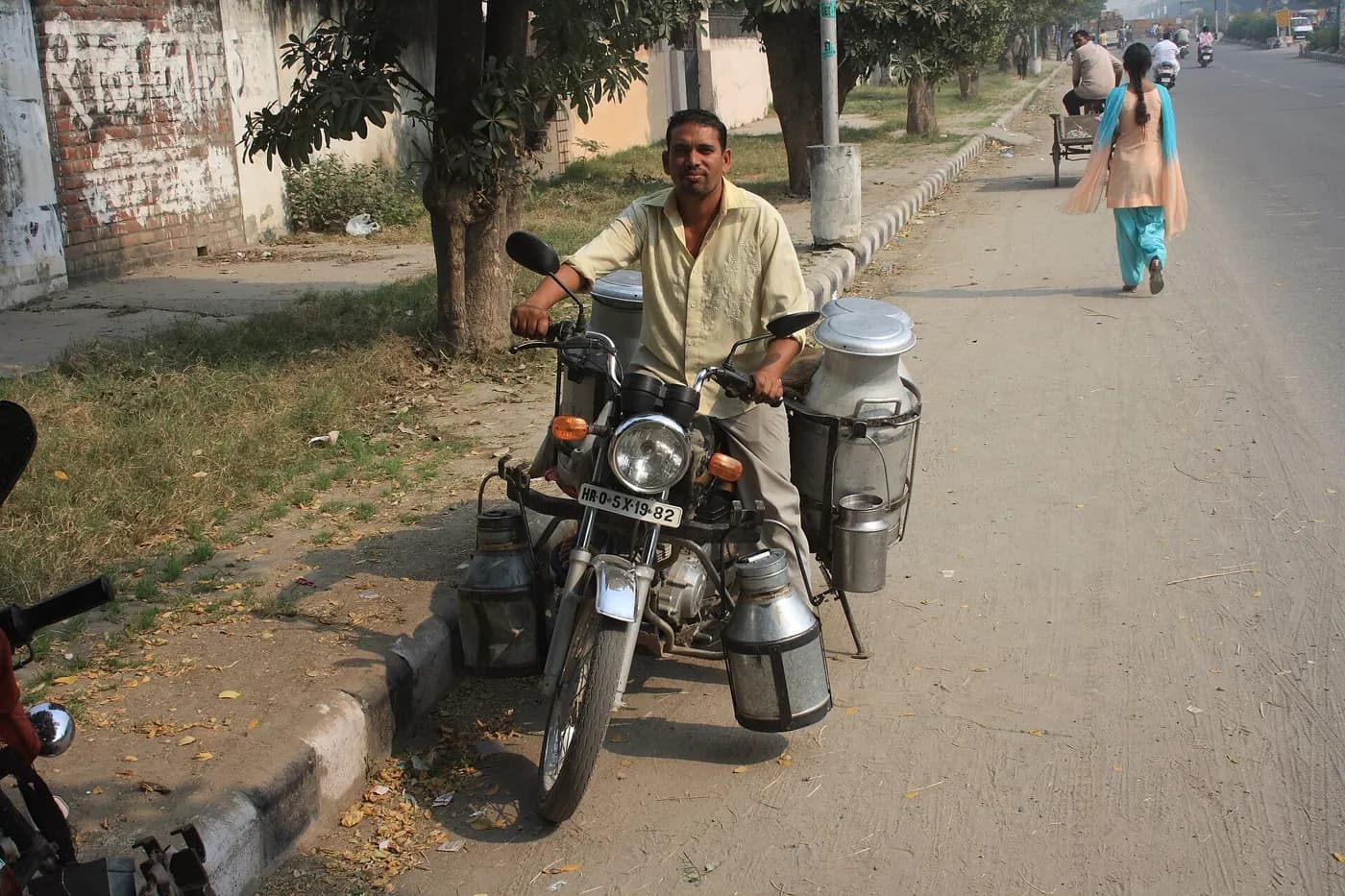
Milk still travels on bicycles and motorcycles, with cans and crates tied on.
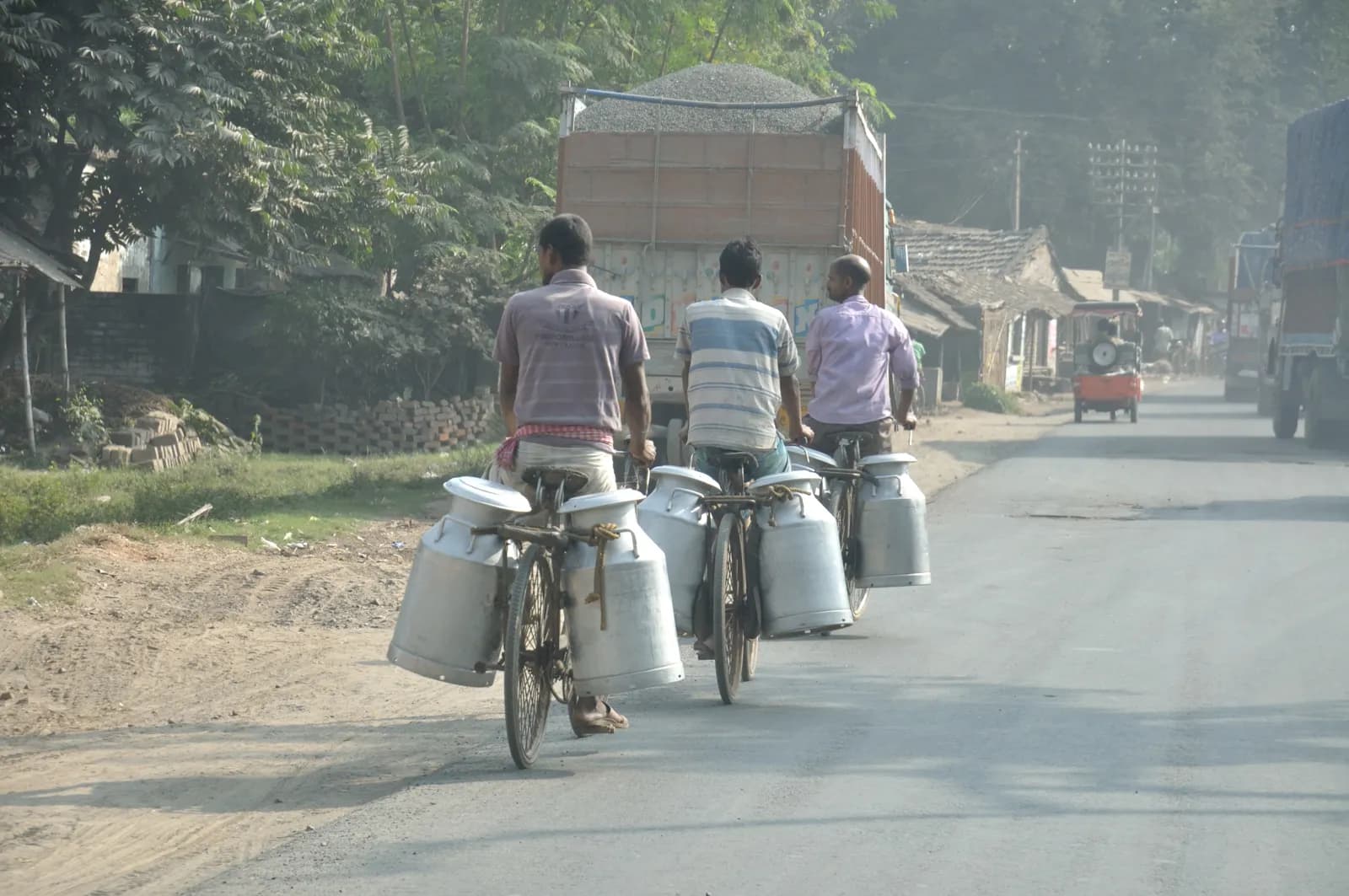
Overloaded two-wheelersMilk round on NH 34, Murshidabad, West BengalPhoto: Biswarup Ganguly, CC BY 3.0, via Wikimedia Commons 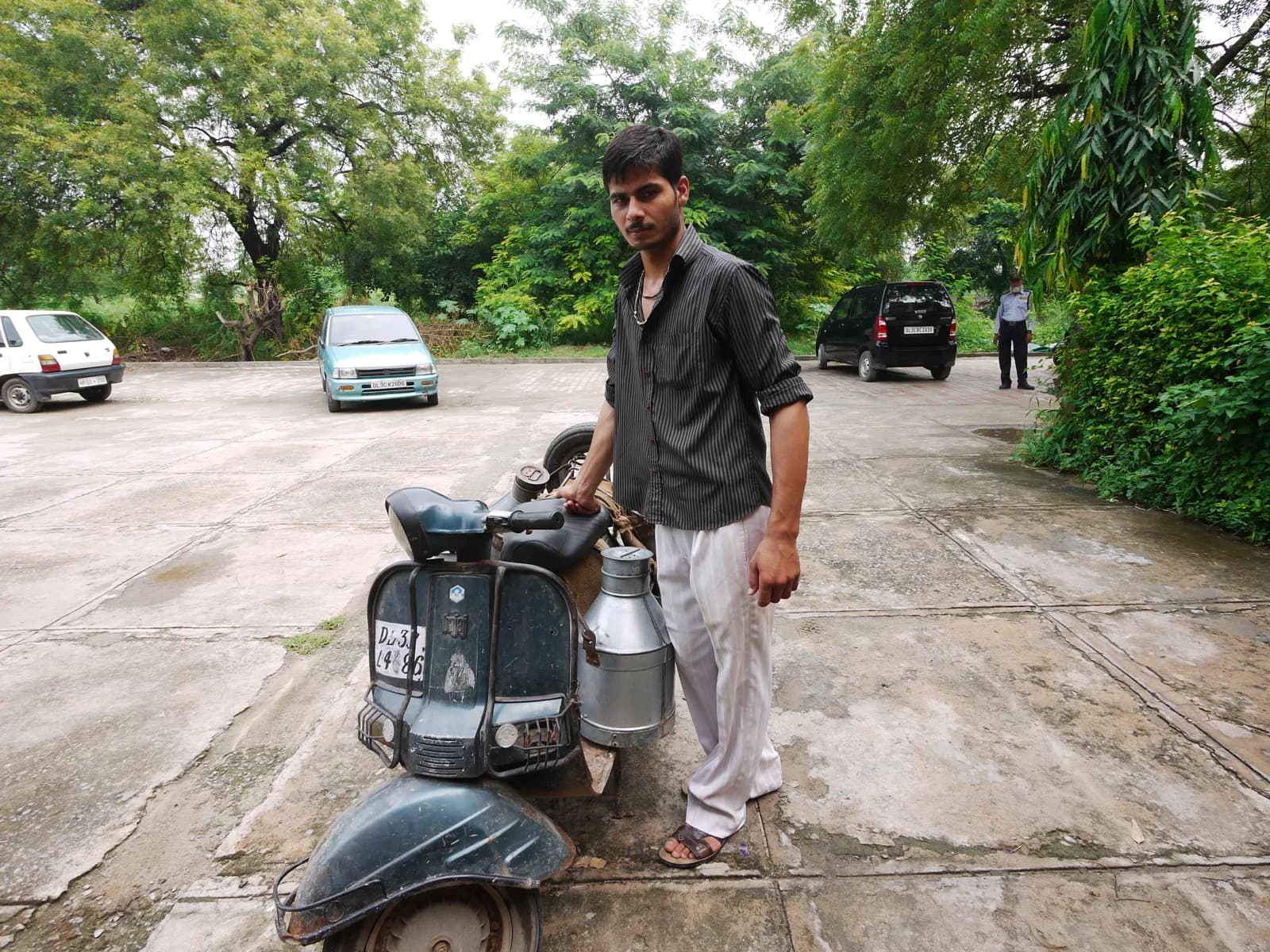
The scooter does a van's jobA milkman and his scooter, IndiaPhoto: Barry Pousman, CC BY 2.0, via Wikimedia Commons
Milkmen carry cans mounted on bicycles or motorcycles that are often old and worn.
Source: The TribuneIn a study of two-wheeler delivery riders near Mumbai, 87% had muscle or joint pain, most often in the lower back, and the weight they carried was linked to it.
Source: Study of delivery riders, Mumbai regionHeat spoils pouches, so milk has to reach the fridge quickly in summer.
Source: OnmanoramaMaharashtra now allows only sealed, labelled milk, so more of it moves as pouches in crates.
Source: Free Press Journal
A day on the route
Depot to doorstep before seven
An illustrative round. The times are sourced; the drops and distances are our working example.
- 5 crates · 60 L04:00
Pick up crates at the depot. Dairies have long had milk at the market by 4 am. Source
- ≈ 6–8 km04:30
First round: doors and a few shops in one neighbourhood.
- 5 crates · 60 L05:45
Back to the depot for the second load.
- ≈ 15–20 km in all07:00
Last drop. Milk apps promise delivery by 7 am. Source
- 2 h 30 on 5 A08:00
Empty crates back. Charge the battery at home.
Illustrative route. Pune milk delivery shifts run from 4 to 8 am.
Load check
Milk is heavy, so weight sets the limit
5 crates
| One crate: 12 × 1 L pouches | 12 L |
|---|---|
| Milk at about 1.03 kg per litre | ≈ 12.4 kg |
| Plus the empty crate | ≈ 14 kg |
| Five crates, 60 L, inside the 80 kg payload | ≈ 70 kg |
| Seven crates, 84 L, inside the 100 kg overload allowance | ≈ 98 kg |
Assumptions
- A standard crate holds 12 × 1 L or 24 × 500 ml pouches (Nilkamal catalogue).
- Milk weighs about 1.03 kg per litre (FAO).
- An empty crate weighs about 1.5 kg, our estimate.
- The 380-litre box holds more crates than the payload allows: load to the payload, not to the lid.
The vehicle, second
CROC EV facts that matter here.
Every figure is from the CROC EV spec sheet.
- Payload
- 80 kg
Plus a 25% overload allowance, 100 kg. Plan the round on this number.
- Lockable box, in front
- 380 L
Crates sit in a closed box ahead of the driver.
- Reverse trike
- 2 + 1
Two wheels in front, one behind, with double-wishbone front suspension.
- Charge, 5 A socket
- 2 h 30
Charge after the round with the 750 W charger. No charging station.
- Range, one battery
- 40 km
80 km with a second removable battery.
- Tracking, remote lock
- GPS
For an owner who hires the rider: see the round, lock the vehicle.
For milk and dairy
Three reasons it fits the job.
Five full crates
80 kg rated payload, plus a 25% overload allowance. Planned by weight, not by space.
A front box
380 litres, lockable, FRP with steel reinforcement, ahead of the driver.
Charged by the next round
About 2 h 30 from an ordinary 5 A socket, with the 750 W charger.
Your route
Tell us what you carry and where. We reply within one working day.
WhatsApp +91 86250 40203
Other trades
More work CROC EV does
Sources
- The Tribune
- Study of delivery riders, Mumbai region
- Onmanorama
- Free Press Journal
- The Better India
- Country Delight
- HathiJobs, Pune milk delivery jobs
- Nilkamal crate catalogue
- FAO, milk density
Photographs from Wikimedia Commons, credited under each one. They show the trade as it is today and are not Speedloop Auto customers.