
UrbanCarriers · For street food and vending
Street food
Stop pushing the stall. Drive it to your spot, locked and charged at home.
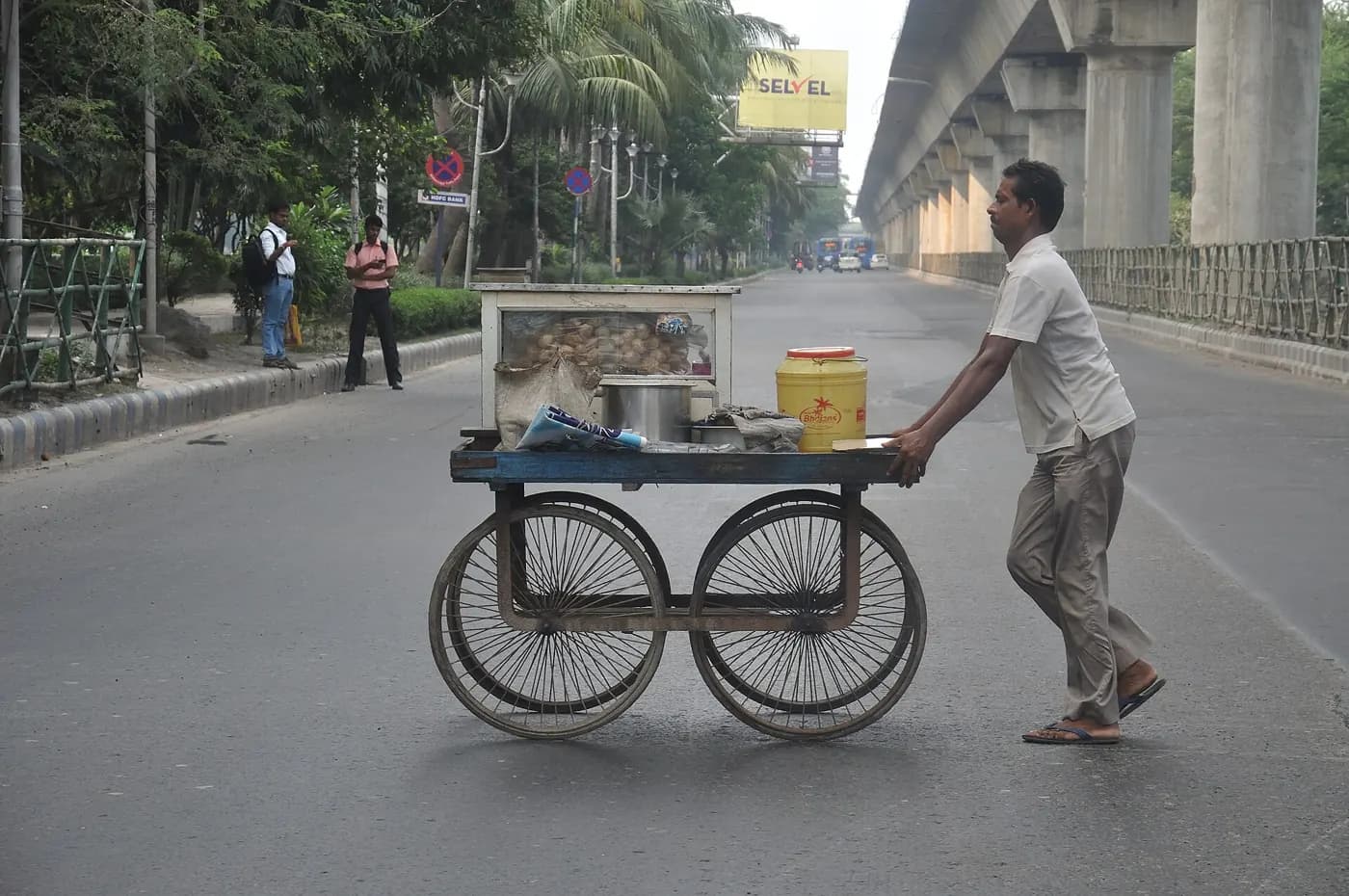
A pani-puri, chaat, chai or vada pav seller does two jobs every day: makes the food, then moves the stall. The food is the skill. The moving is pushing a loaded cart through traffic and up slopes, before and after a long shift.
- Thela ठेला · pushcart
- Tapri टपरी · small tea stall
- Khau galli खाऊ गल्ली · food lane
The work today
What the job asks of people now.
Hand carts and cycle carts are the most common way to vend in India.
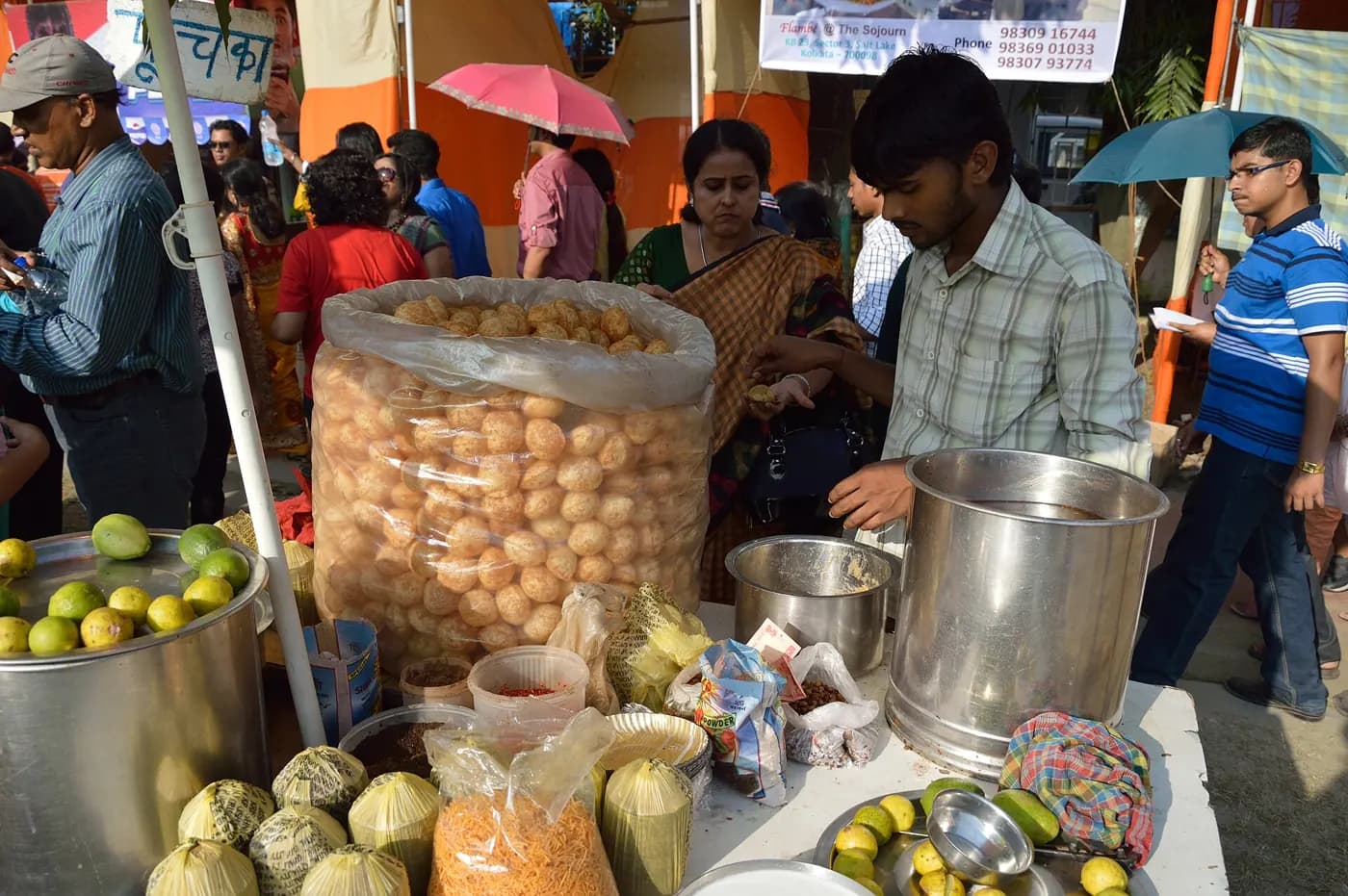
The stall at the spotPani-puri stall, KolkataPhoto: Biswarup Ganguly, CC BY 3.0, via Wikimedia Commons 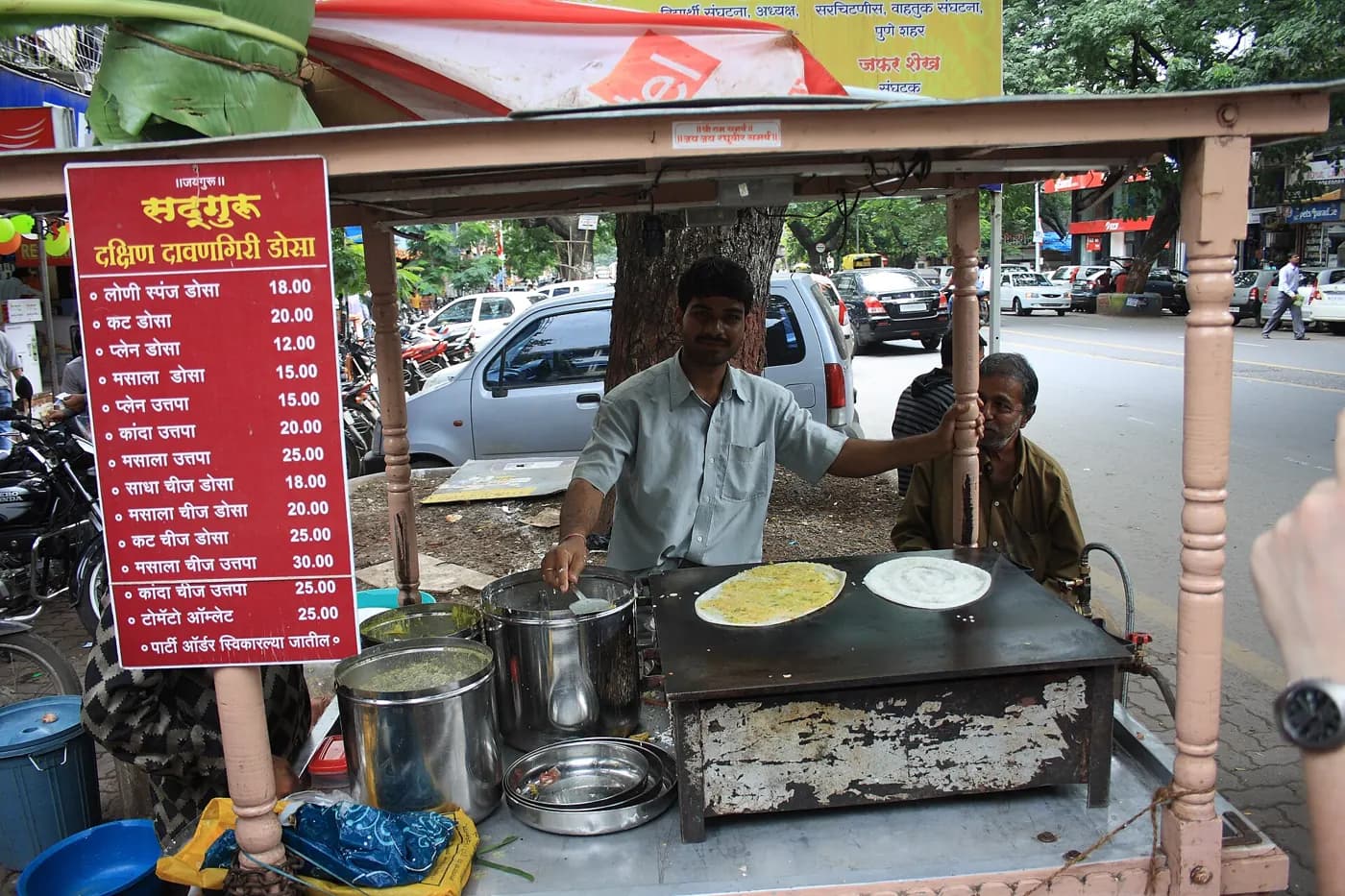
A morning stallMasala dosa stand, PunePhoto: Arne Hückelheim, CC BY-SA 3.0, via Wikimedia Commons
Hand-pushed carts and cycle carts are how most cooked-food and juice sellers reach a busy spot.
Source: NCERT, Urban LivelihoodsVendors push carts loaded with more than 50 kg for 5 to 6 km a day, and slopes are the hardest part. In a survey of 100 vendors, 60% had health problems from it.
Source: GITAM / KSCST study of vendor cartsPulling a handcart counts as heavy physical work even when it is empty.
Source: National Medical Journal of IndiaMany sellers eat one late meal a day, and the monsoon cuts sales.
Source: Citizen Matters
A day on the route
Prep at home, sell at the spot
An illustrative evening pani-puri day. The times and loads are our working example.
- puri bags · pots12:30
At home: fry the puris, boil the potatoes, make the pani and chutneys. Source
- ≈ 45–55 kg16:00
Load the stall: pani, water, puri bags, masala and chutney pots.
- 1–3 km16:30
Drive to the spot.
- at the spot17:00
Sell until late, with one pani refill.
- 2 h 30 on 5 A23:00
Drive home, lock the box, charge the battery.
Illustrative day, not a named vendor.
Load check
One evening's stock
≈ 50 kg
| Pani and drinking water, 20 L | ≈ 20 kg |
|---|---|
| 5 kg LPG cylinder, full, with its body | ≈ 10 kg |
| Potato masala, sprouts, chutneys | ≈ 10 kg |
| Puri bags, plates, pots, cash box | ≈ 10 kg |
| CROC EV rated payload | 80 kg |
Assumptions
- Water at 1 kg per litre; the other weights are our estimates.
- Tea and pakoda carts commonly use 5 kg cylinders (Down To Earth).
- A vending body's own weight counts against the payload; we confirm it for each build.
- Carrying gas on a vending body is decided in the build scope with our engineers.
The vehicle, second
CROC EV facts that matter here.
Every figure is from the CROC EV spec sheet.
- Lockable cargo box
- 380 L
A closed FRP box with steel reinforcement keeps dust off the stock and locks at night.
- Vending body
- To order
Vending bodies are built to order on the same chassis.
- Charge, 5 A socket
- 2 h 30
Charge at home from an ordinary socket with the 750 W charger.
- Overall width
- 930 mm
A narrow footprint for a lane, a market edge or a hawker-park bay.
- Payload
- 80 kg
Plus a 25% overload allowance. An evening's stock fits.
- Certified e-cart
- ARAI
A registered commercial vehicle. A vending licence is a separate permission.
For street food and vending
Three reasons it fits the job.
A closed box
380 litres, lockable, FRP with steel reinforcement, in front of the driver.
Built for the food
Vending bodies built to order on the same certified chassis, scoped with our engineers first.
Any socket
About 2 h 30 from an ordinary 5 A socket. The battery is removable.
Your route
Tell us what you carry and where. We reply within one working day.
WhatsApp +91 86250 40203
Other trades
More work CROC EV does
Sources
- NCERT, Urban Livelihoods
- GITAM / KSCST study of vendor carts
- National Medical Journal of India
- Citizen Matters
- Down To Earth
Photographs from Wikimedia Commons, credited under each one. They show the trade as it is today and are not Speedloop Auto customers.