
It stands on its own
With three wheels, it stays upright at every stop. The driver does not have to balance a loaded scooter.
UrbanCarriers / Last mile
Last-mile case study
We take one normal parcel delivery day and run it on three vehicles: a petrol scooter, a CROC EV and a CNG goods three-wheeler. This is a calculation, not a customer's result. Every number comes from the CROC EV spec sheet or is written on this page, so you can check it with your own numbers.
The delivery day
These are the numbers we used. If your numbers are different, your result will be different too. The fuel prices and mileage are the same as in our running-cost calculator.
The comparison
One 60 kg trip needs three scooter trips, fills three-quarters of a CROC EV, and fills only a tenth of a goods three-wheeler. We compare only the fuel or electricity cost. The vehicle price, loan, insurance, servicing and driver's salary are not included.
| On this delivery day | Petrol scooter | CROC EV | CNG goods three-wheeler |
|---|---|---|---|
| How much it can carry | About 20 kg, on the seat or in a crate | 80 kg rated, 100 kg with the 25% overload allowance | About 600 kg |
| Trips needed for 60 kg | 3 | 1 | 1 |
| How full 60 kg makes it | 300% | 75% | 10% |
| Where the parcels go | Tied on the seat, in a crate or a bag | 380-litre box with a lock, in front of the driver | Open or closed body, depending on the model |
| Fuel or electricity cost per km | ₹2.33 | ₹0.42 | ₹3.60 |
| Cost per day (60 km) | ₹140 | ₹25 | ₹216 |
| Cost per month (26 days) | ₹3,640 | ₹655 | ₹5,616 |
| Where you fill up or charge | Petrol pump | Any 5 A plug point, about 2.5 hours per battery | CNG station |
How we calculated it: cost per km is the fuel price divided by the mileage (for CROC EV, 0.042 units × ₹10). Cost per day is that multiplied by 60 km, and cost per month is the day multiplied by 26 days. One CROC EV battery runs about 40 km, so for 60 km the driver swaps in the second battery at the hub between trips. Try your own numbers in our running-cost calculator.
From our field visits
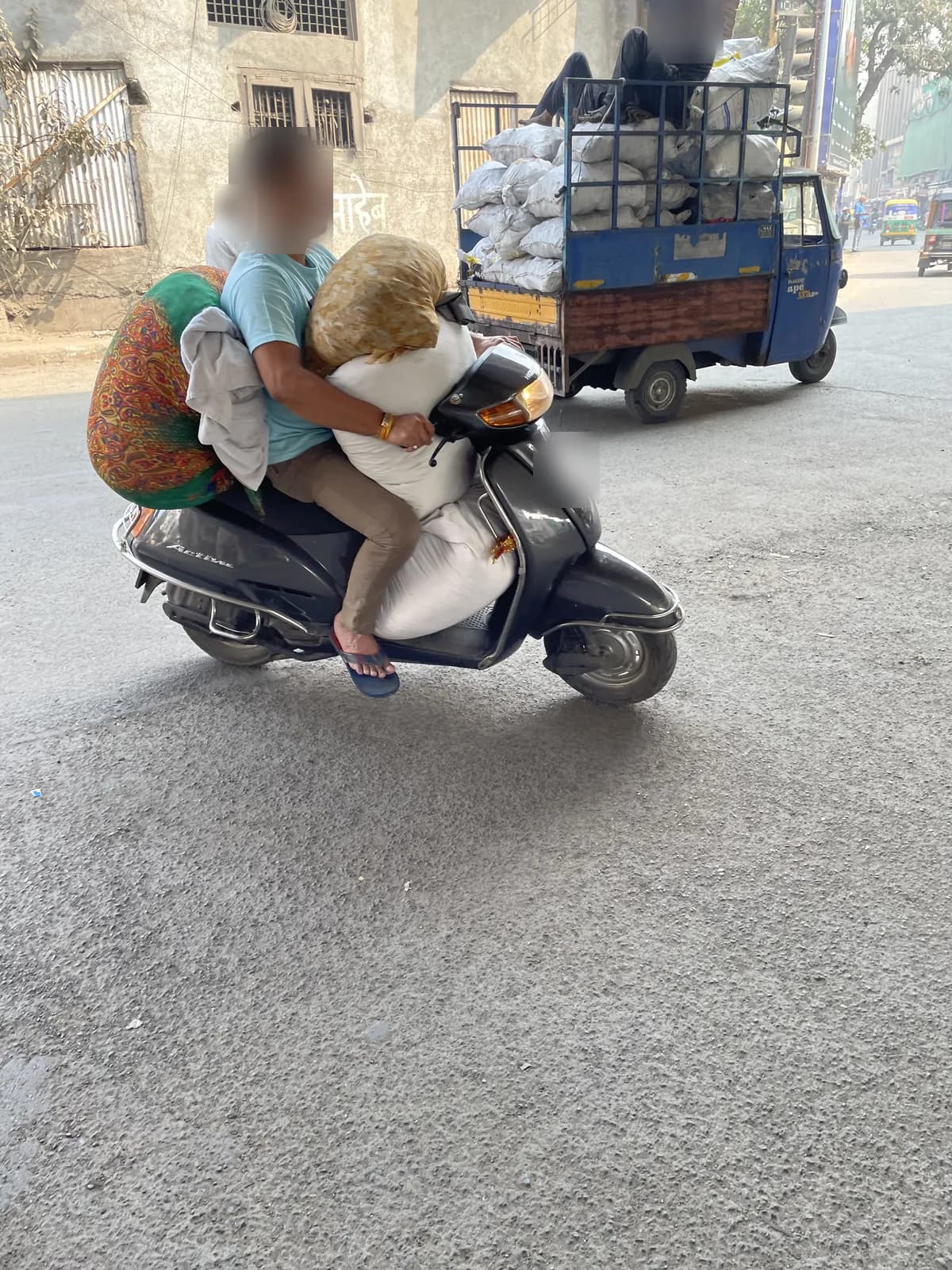
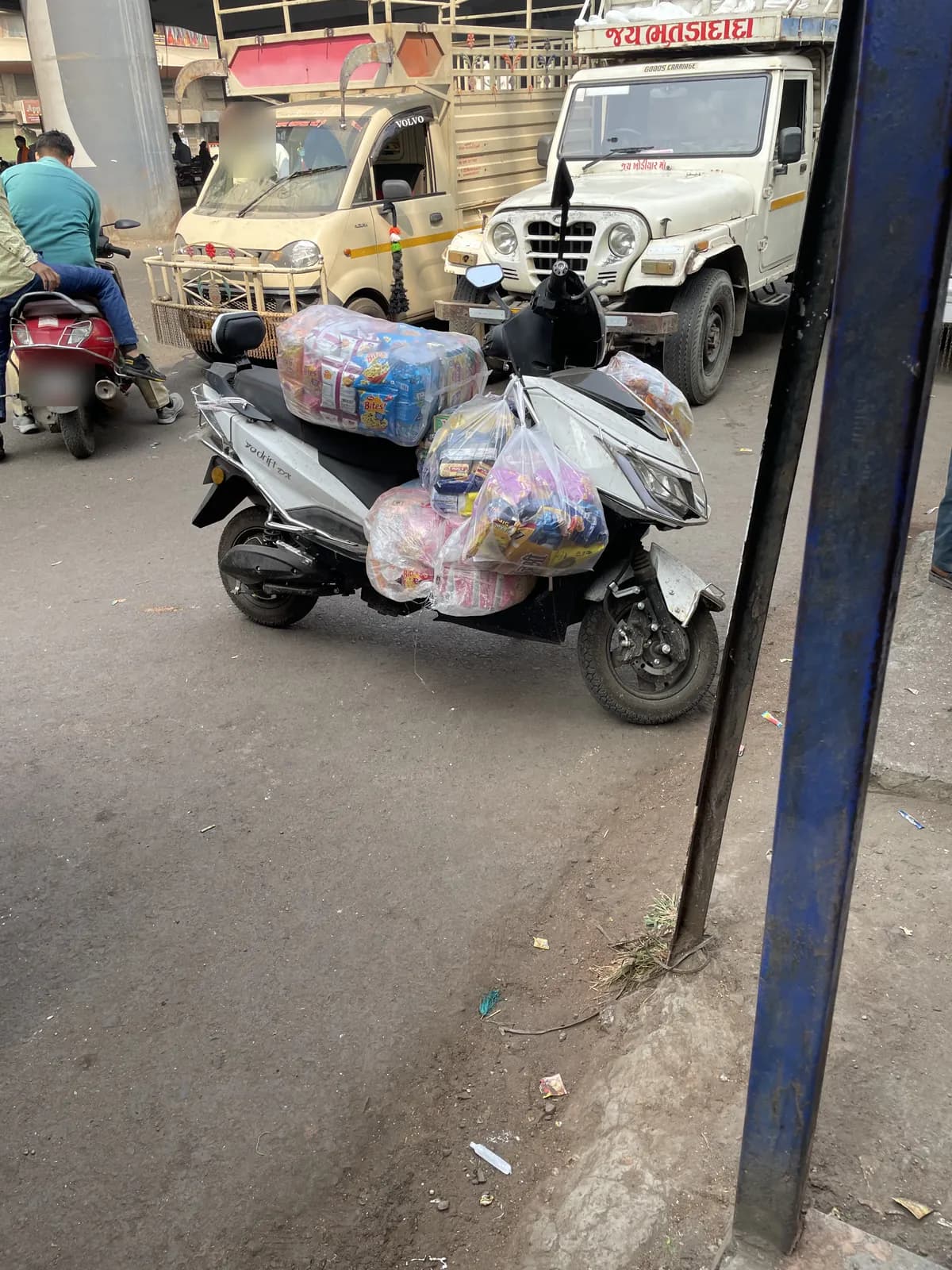
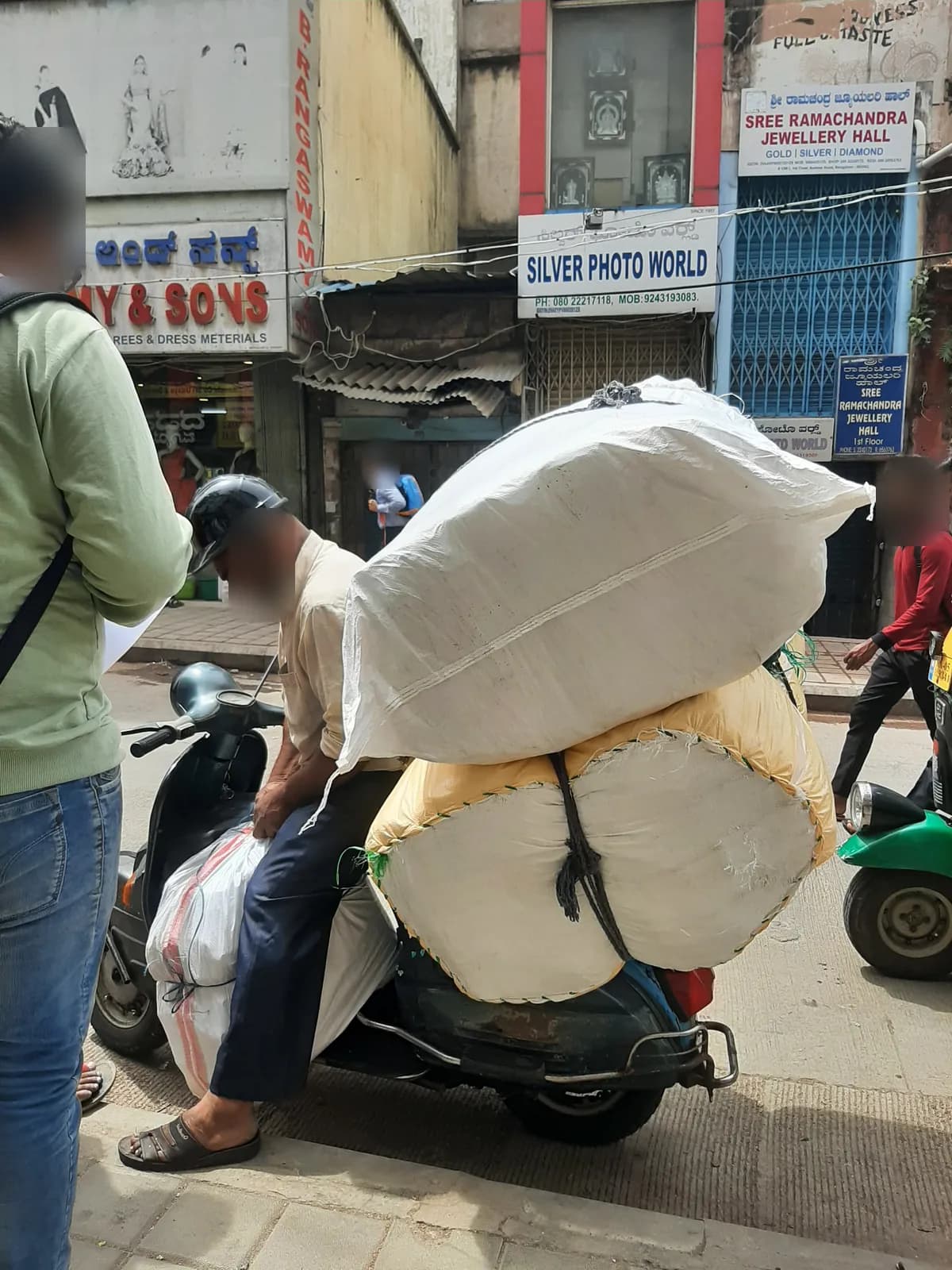
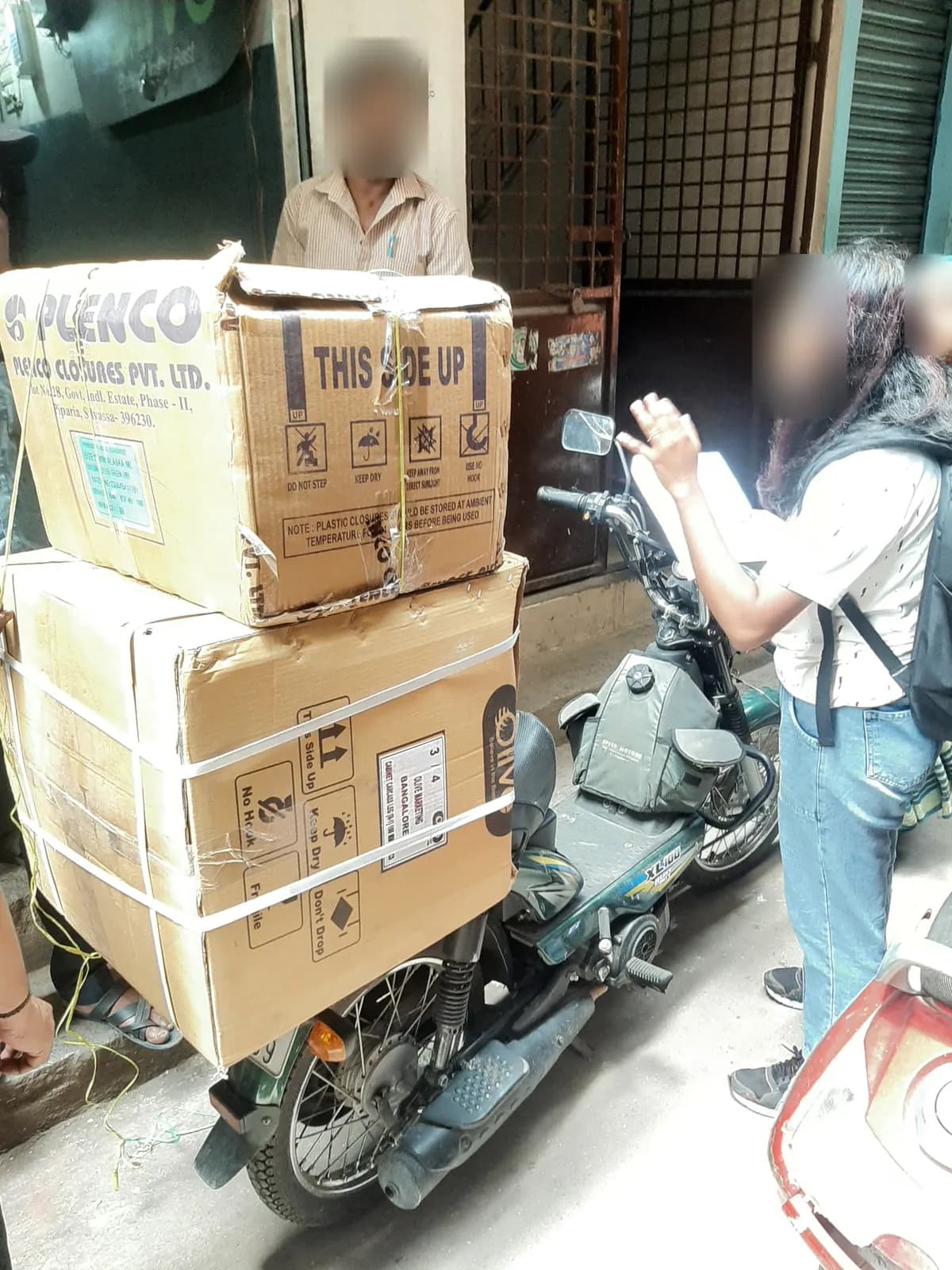
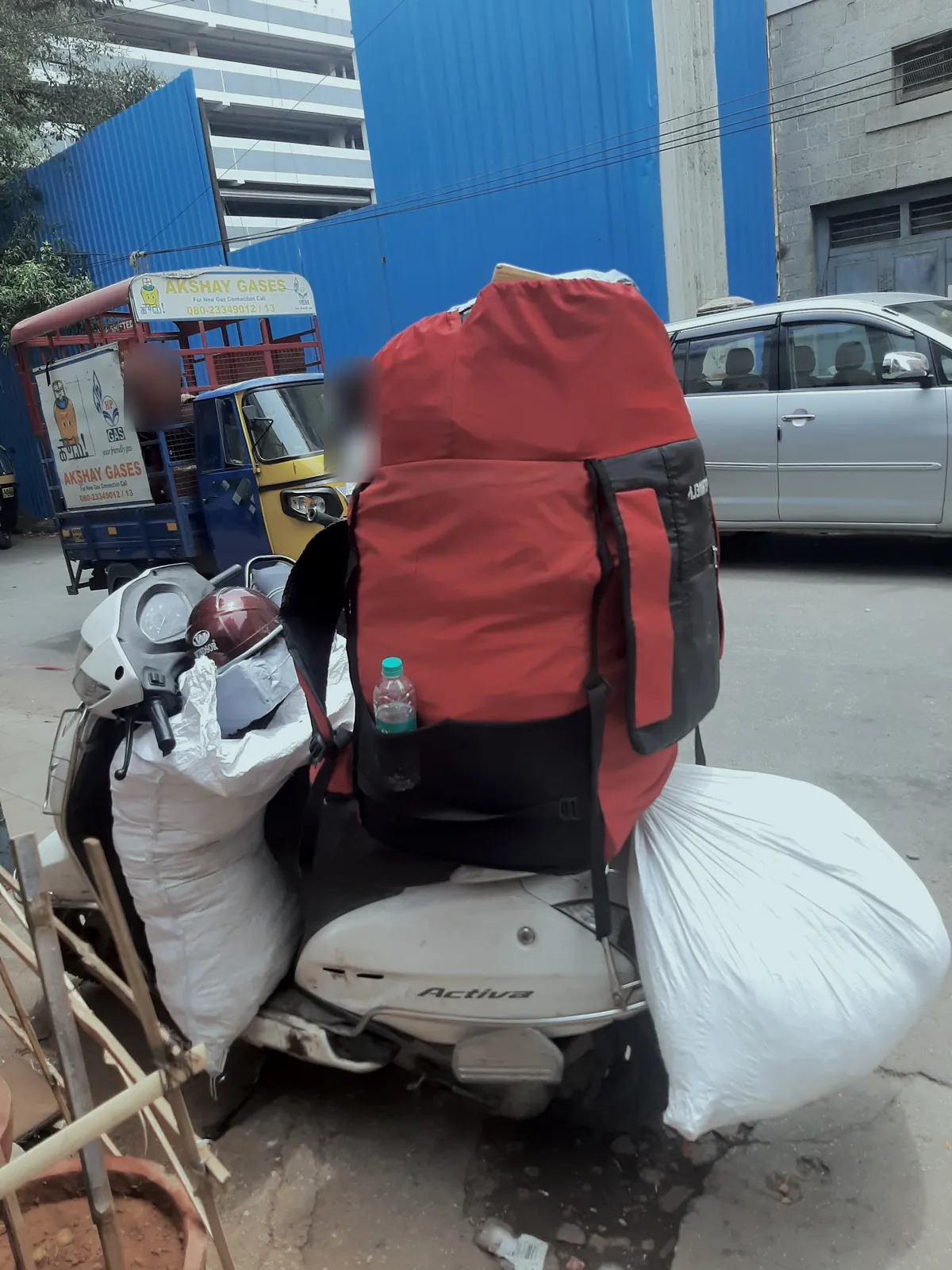
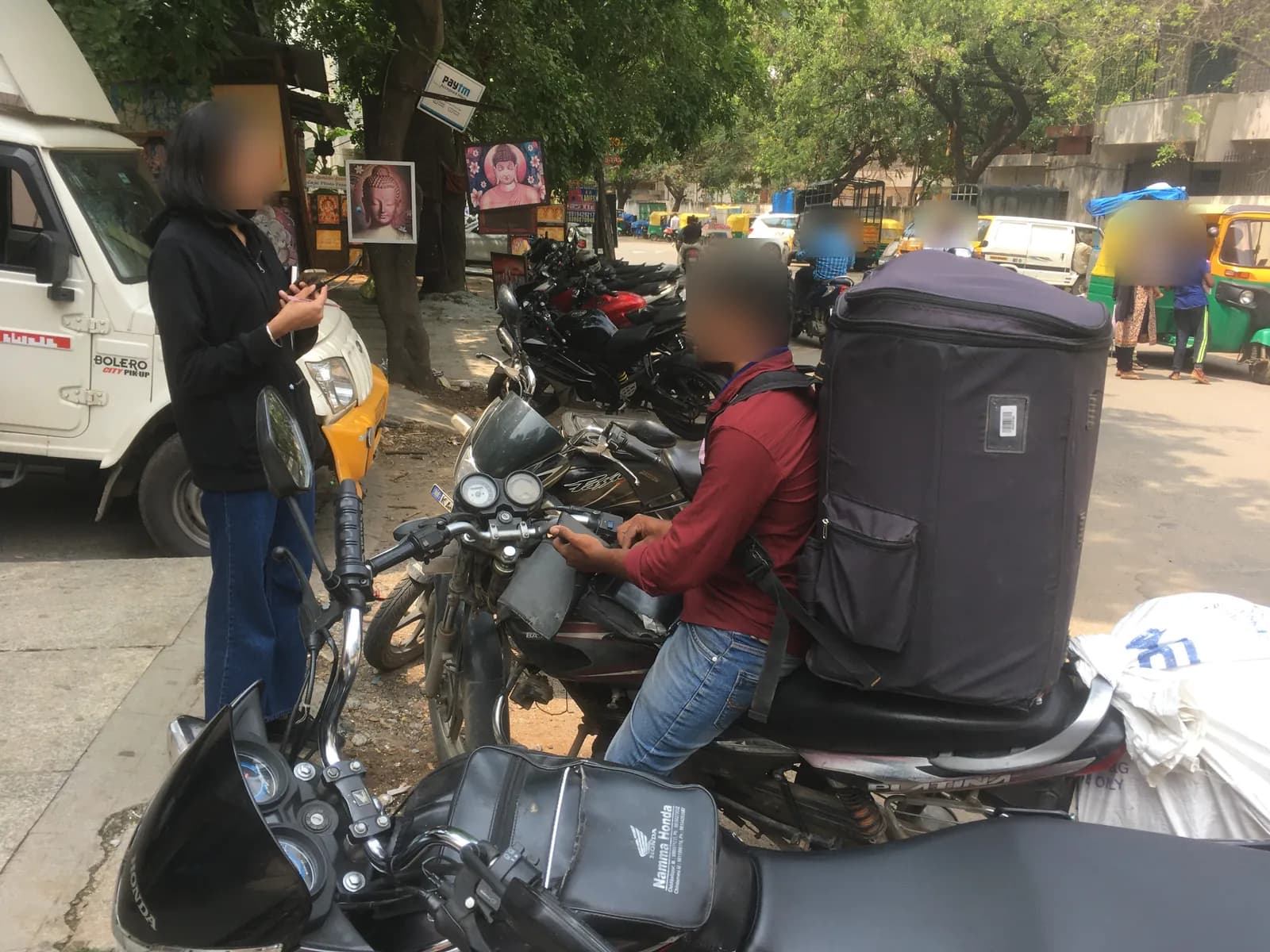
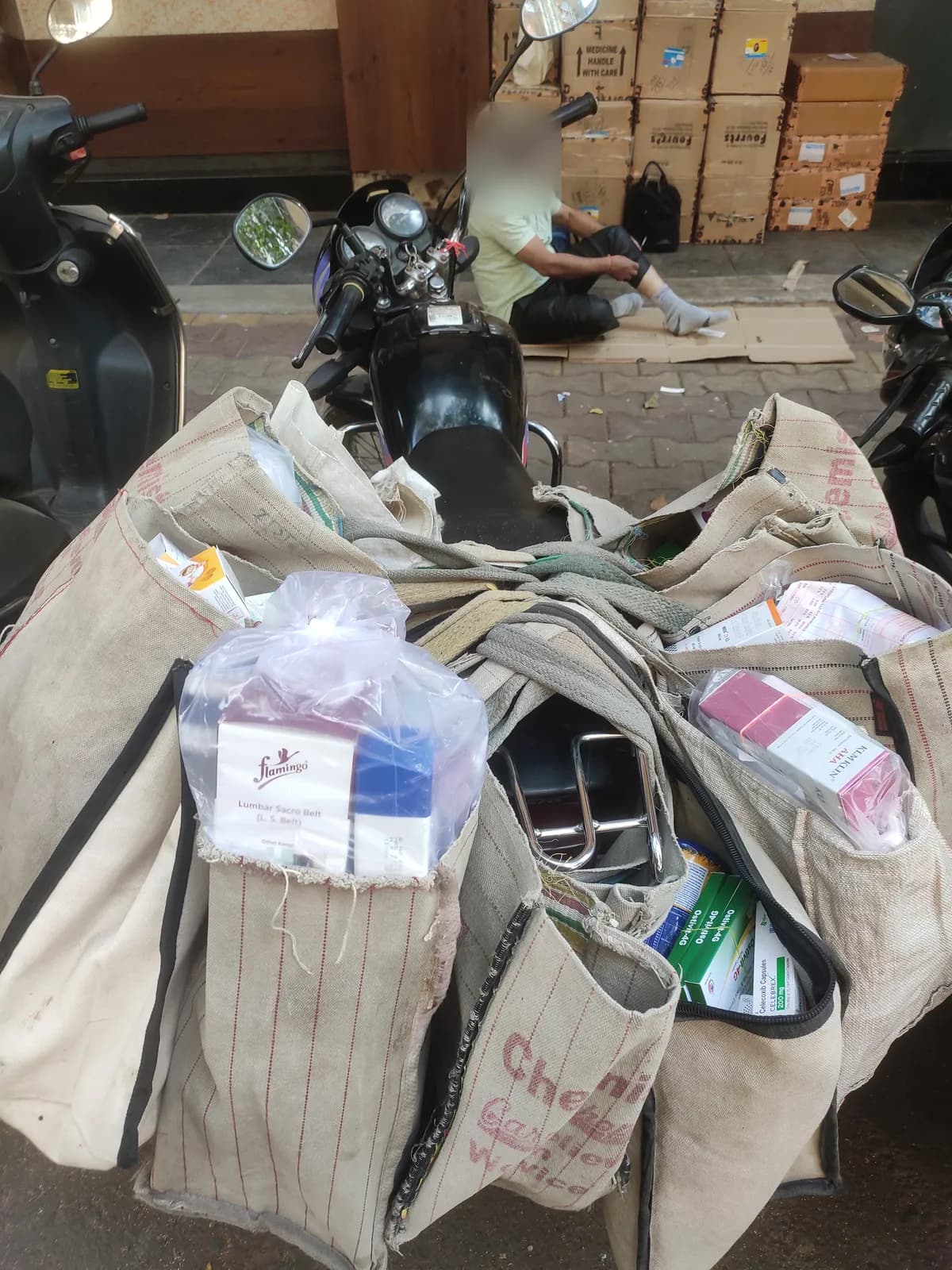
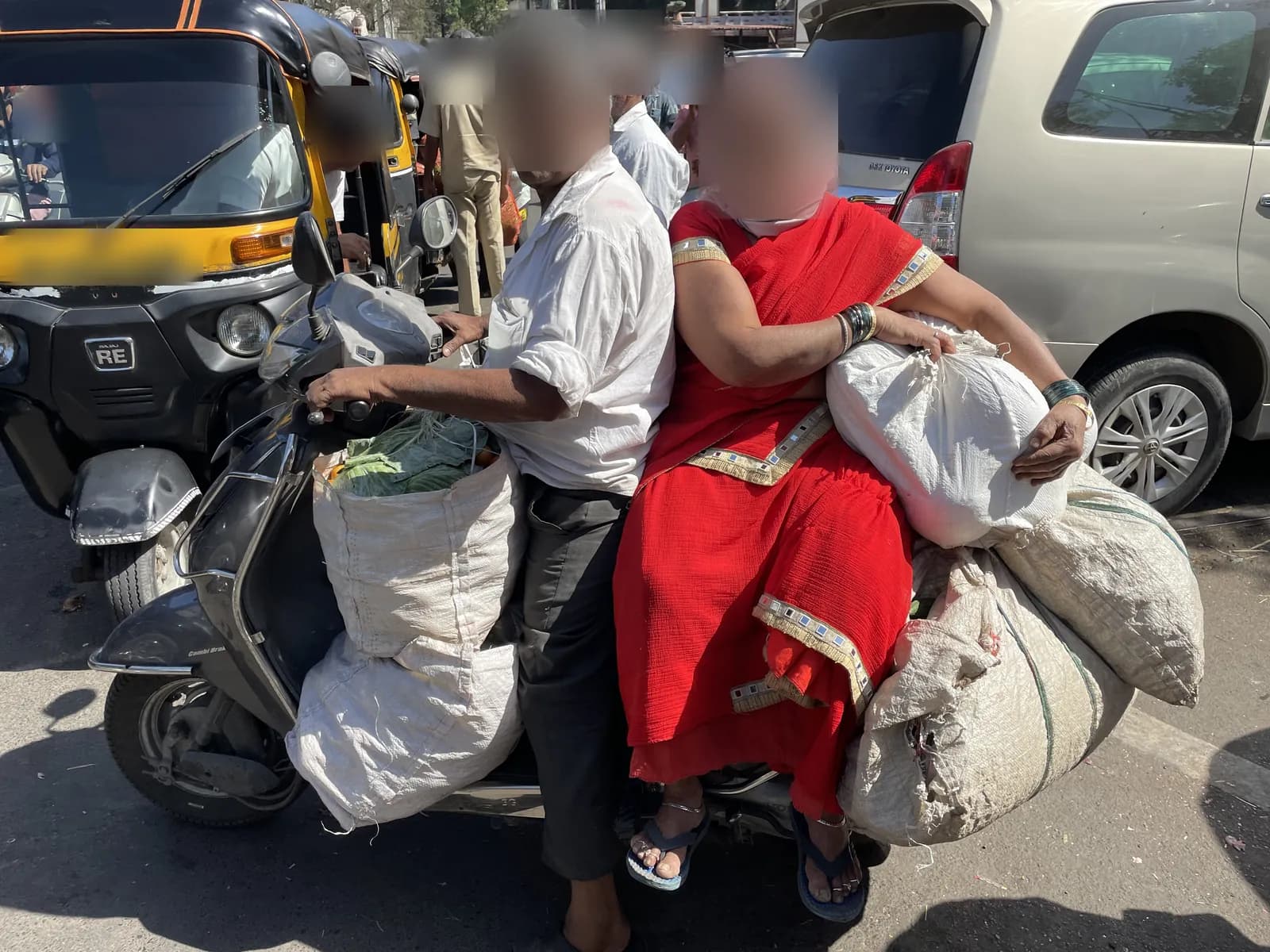
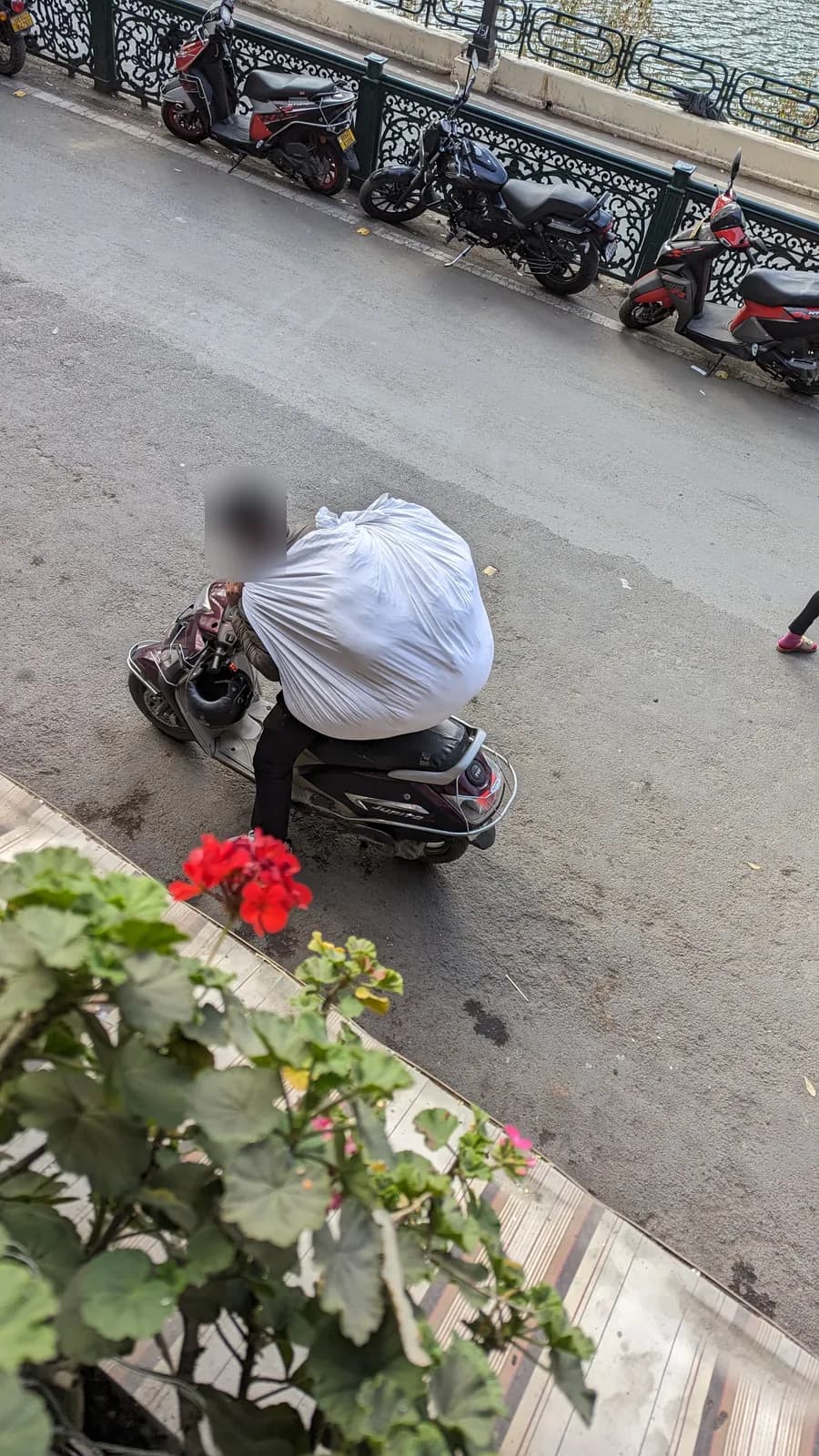
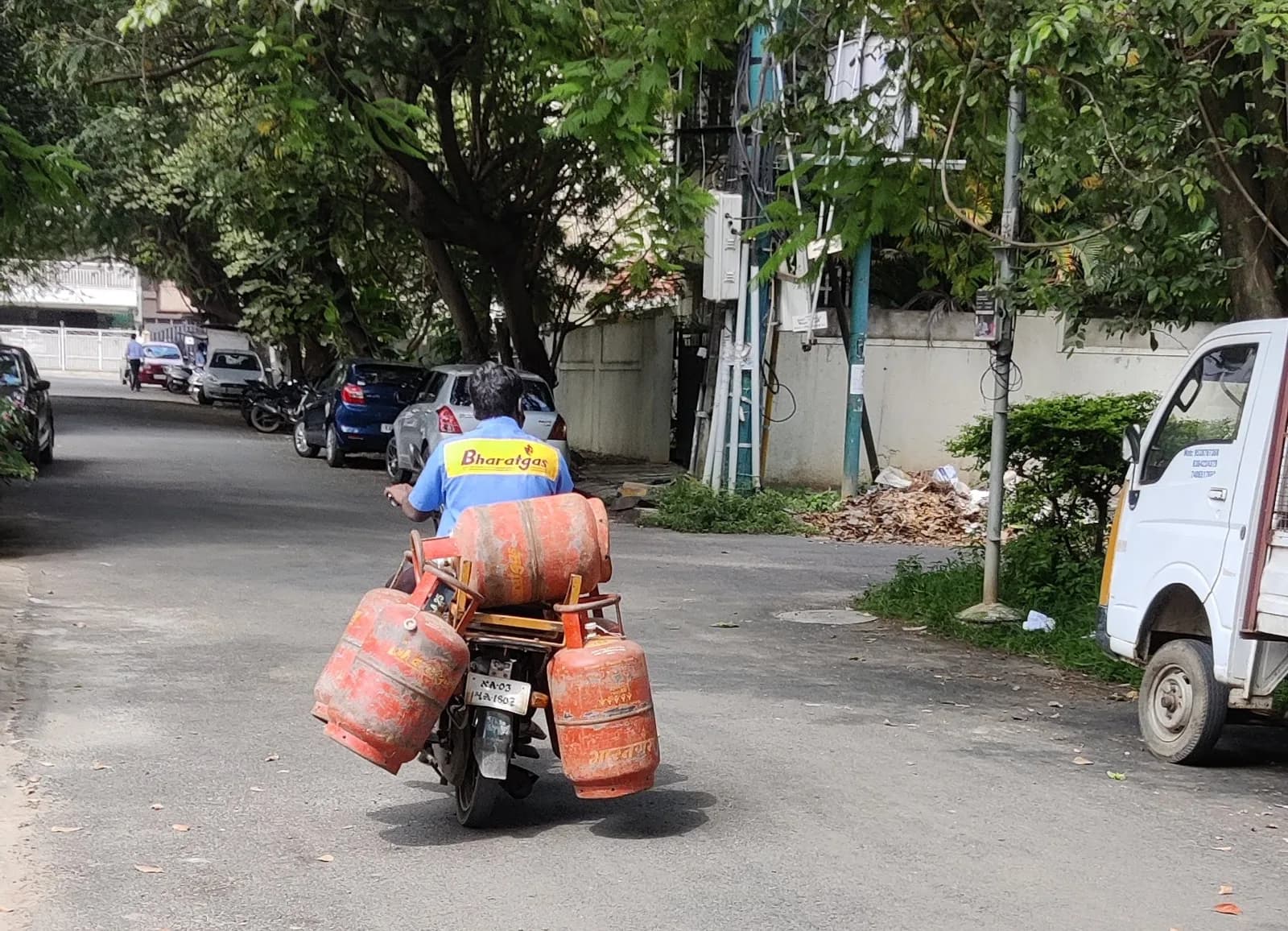
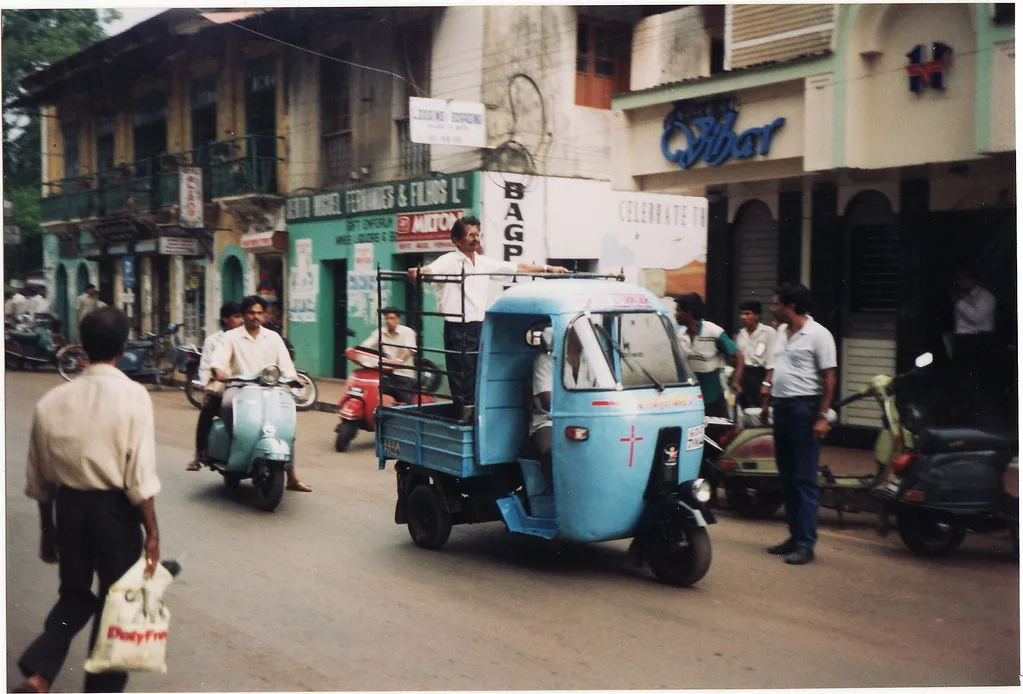
Our founders took these photos between 2022 and 2024 while meeting shopkeepers, delivery riders and traders. In every photo, a two-wheeler is carrying far more than it was made for.
For drivers
A delivery driver spends more time stopping and unloading than riding. CROC EV is built to make every stop easier.
With three wheels, it stays upright at every stop. The driver does not have to balance a loaded scooter.
The 380-litre box is in front of the seat and locks at every stop. Nothing is tied loosely on the seat or footboard.
It starts only when the driver is seated and the brake is pressed, and it switches off when left idle. It stays put while the driver is at a door.
The driver sits comfortably, with back support, through the whole day.
It charges from a normal 5 A plug point in about 2.5 hours, at the hub or at home.
CROC EV is ARAI certified and is registered as an e-cart, which is a commercial vehicle.
For fleet owners
Whether you run 3 vehicles or 30, you want to know three things: how many vehicles a route needs, what they cost to run, and where they are.


One CROC EV carries a 60 kg trip. On scooters, the same load needs three trips: three riders, or one rider going three times.
₹655 a month per vehicle on this route, compared with ₹3,640 for a petrol scooter, using the numbers above.
GPS shows where each vehicle is. You get an alert if a vehicle leaves its area, and you can lock it from your phone.
The battery comes out. With a second battery, one day's range goes from 40 km to 80 km. Swap it at the hub while the next trip is being loaded.
Before you order a fleet, we run a trial on your own routes, so you can judge it with your own parcels and your own lanes.
Most buyers take a vehicle loan, and we can help you with financing options.
Lessons from Mumbai's dabbawalas
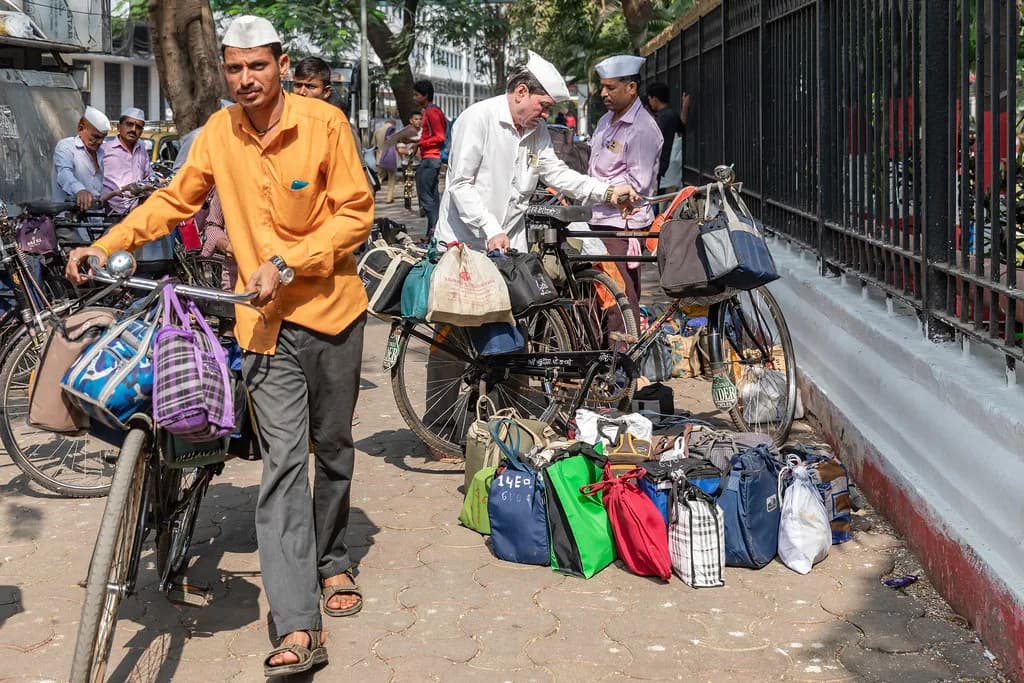
Mumbai's dabbawalas have delivered lunch boxes for more than 100 years, mostly on foot, by bicycle and by handcart, and their system is studied around the world. Their method works with any vehicle: sort parcels by area, load the last stop first, and keep the same person on the same route.
Where it does not fit
Top speed is 25 km/h. It is made for city deliveries, not highways or trips between cities.
Up to 80 km a day with two batteries. For longer days, charge in between or use a different vehicle.
If one trip is more than 100 kg, a goods three-wheeler is better. Inside factories and campuses, Titan EV pulls 250 kg to one tonne.
Your route
Tell us how many parcels you carry per trip, the weight of your heaviest trip, your usual carton sizes and the distance of each trip. We reply within one working day.

